Preparing land for the cultivation of herbs and spices in an open environment demands a comprehensive understanding of occupational safety and health procedures. This ensures that workers remain protected from hazards associated with land preparation activities such as soil tilling, use of machinery, and chemical applications. In Kenya, where horticultural farming is a significant contributor to livelihoods and the economy, adherence to safety protocols not only prevents injuries but also promotes sustainable agricultural practices. This chapter focuses on embedding occupational safety and health measures into land preparation processes to safeguard workers and optimize productivity.
2.1 Procedures for Occupational Safety and Health
Occupational safety and health (OSH) procedures are essential to prevent accidents and health risks during the preparation of land for herb and spice production. Given the variety of tasks involved, ranging from manual labor to mechanized operations, workers face multiple hazards such as exposure to pesticides, physical injuries, and ergonomic strains. In Kenya, institutions like the Directorate of Occupational Safety and Health Services (DOSHS) provide guidelines that horticultural enterprises must follow to ensure compliance and worker welfare. Integrating OSH into daily operations also enhances worker morale and reduces downtime caused by workplace injuries.
2.1.1 Identification and Assessment of Hazards in Land Preparation
The first step in implementing effective occupational safety and health procedures is to identify and assess potential hazards in the land preparation phase. This process involves recognizing sources of danger that can cause harm to workers and evaluating the severity and likelihood of these risks.
Identification of Hazards
- Physical Hazards: These include risks from the use of machinery such as ploughs, rotavators, and hoes which can cause cuts, bruises, or more severe injuries if improperly handled.
- Chemical Hazards: Exposure to herbicides, pesticides, and fertilizers during land clearing and soil treatment poses risks of poisoning and skin irritation.
- Biological Hazards: Workers may encounter harmful organisms such as snakes, insects, or harmful microbes present in the soil.
- Ergonomic Hazards: Repetitive manual tasks such as digging or lifting heavy loads can lead to musculoskeletal disorders.
- Environmental Hazards: Weather conditions like extreme heat or heavy rain can cause heat stress or slips and falls during fieldwork.
Risk Assessment
- Severity Evaluation: Determining the potential impact of each hazard on worker health and safety, considering factors like the possibility of fatality, injury, or illness.
- Probability Estimation: Assessing how likely it is for the hazard to cause harm during land preparation activities.
- Exposure Frequency: Understanding how often workers are exposed to each hazard during their tasks.
- Vulnerable Groups Identification: Recognizing workers more susceptible to hazards, such as pregnant women or those with pre-existing health conditions.
- Documentation: Maintaining records of identified hazards and risk levels to inform safety planning and compliance with Kenyan OSH regulations.
2.1.2 Use of Personal Protective Equipment (PPE) in Land Preparation
Personal Protective Equipment (PPE) is a critical component in minimizing risks during land preparation for herbs and spices. Proper use of PPE protects workers from direct contact with hazards and reduces the severity of injuries when accidents occur.
Types of PPE Relevant to Land Preparation
- Gloves: Protect hands from cuts, abrasions, and chemical exposure, especially when handling fertilizers and pesticides.

Pair of yellow work gloves used in carpentry (Source: Wikimedia Commons)
- Safety Boots: Provide foot protection against sharp objects, heavy equipment, and slippery surfaces.
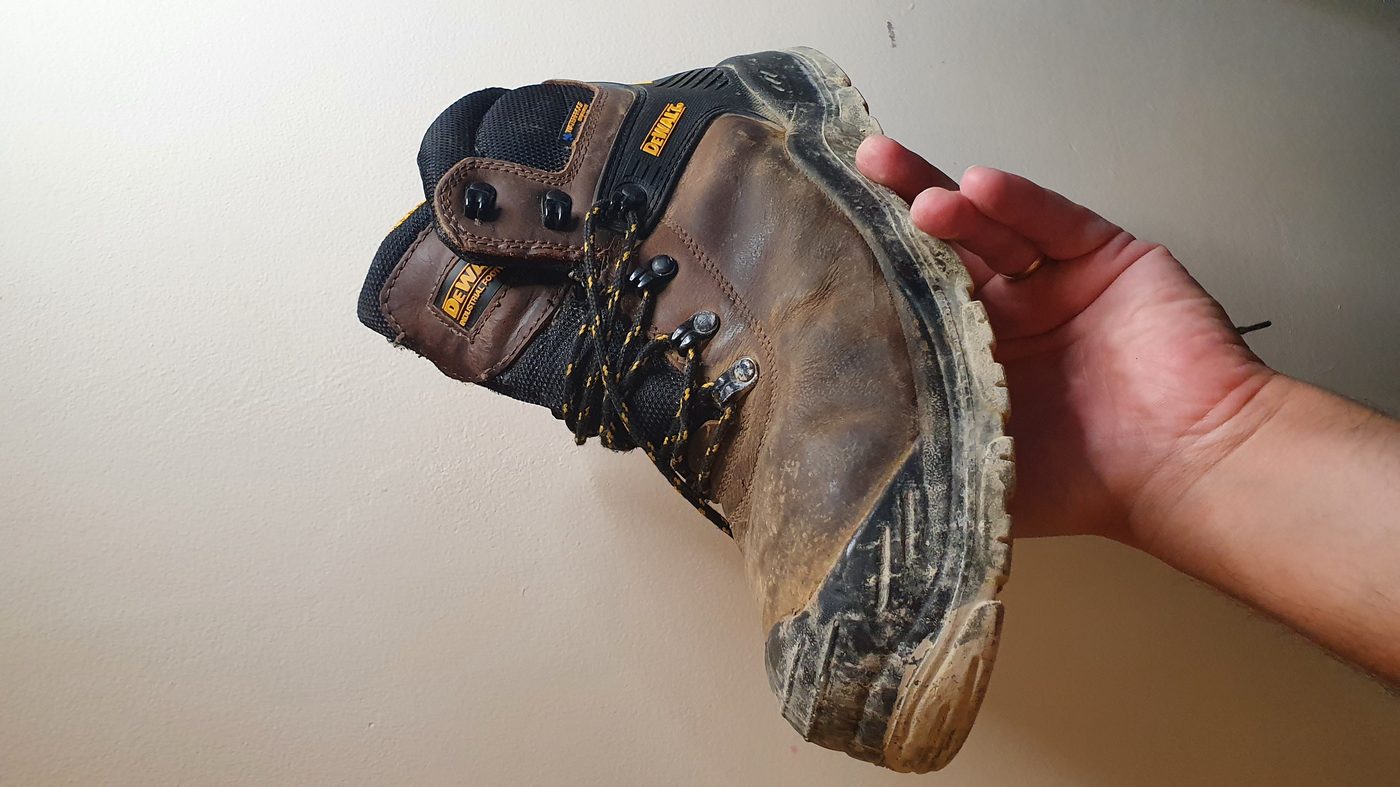
A single safety boot for industrial use (Source: Wikimedia Commons)
- Protective Clothing: Includes overalls and aprons that shield the skin from chemical splashes and insect bites.
- Eye Protection: Goggles or face shields prevent soil particles, chemical sprays, or plant debris from causing eye injuries.
- Respiratory Protection: Masks or respirators are essential when applying pesticides or working in dusty environments to prevent inhalation of harmful substances.
Proper Use and Maintenance of PPE
- Correct Selection: PPE must be chosen based on the specific hazards identified in the work environment.
- Training: Workers need instruction on how to correctly wear, adjust, and remove PPE to ensure maximum protection.
- Regular Inspection: PPE should be checked before use for any damage or wear and replaced as necessary.
- Cleaning and Storage: Proper hygiene practices for cleaning reusable PPE and storing it in a clean, dry place extend its usability and effectiveness.
- Compliance Monitoring: Supervisors must enforce PPE usage consistently to maintain safety standards.
2.1.3 Safe Operation of Tools and Machinery in Land Preparation
Land preparation often involves the use of various tools and machinery which, if mishandled, can lead to serious injuries. Ensuring safe operation is vital to protect workers and maintain efficient production.
Pre-Operation Safety Checks
- Equipment Inspection: Check for defects such as loose parts, sharp edges, or fuel leaks before use.
- Functionality Testing: Confirm that all safety guards and emergency stops are operational.
- Calibration: Ensure machinery settings match the requirements for the specific land preparation task to avoid malfunction.
Safe Operating Practices
- Training: Operators should be competent and certified to use machinery like tractors, rotavators, or tillers.
- Clear Work Area: Remove obstacles and bystanders from the operating zone to prevent accidents.
- Use of PPE: Operators must wear appropriate protective gear such as earplugs and helmets.
- Communication: Use signals or radios when working in teams to coordinate movements and avoid mishaps.
- Maintenance: Regular servicing of machinery prevents breakdowns and reduces accident risks.
Emergency Procedures
- Shutdown Protocols: Operators must know how to quickly stop equipment in case of an emergency.
- First Aid Readiness: Availability of first aid kits and trained personnel near operating sites.
- Incident Reporting: Prompt reporting and documentation of accidents to improve safety measures.
2.1.4 Safe Handling and Application of Agrochemicals
The use of agrochemicals such as herbicides, pesticides, and fertilizers is common in preparing land for herb and spice cultivation. Safe handling is crucial to prevent poisoning, environmental contamination, and harm to non-target organisms.
Principles of Safe Agrochemical Handling
- Proper Storage: Chemicals should be stored in locked, labeled containers away from children and animals, and protected from extreme weather.
- Correct Mixing: Follow manufacturer instructions for dilution and mixing to avoid toxic concentrations.
- Application Techniques: Use calibrated sprayers and apply chemicals during appropriate weather conditions to minimize drift and runoff.
- Disposal: Empty containers and leftover chemicals must be disposed of according to environmental guidelines to prevent soil and water pollution.
- Record Keeping: Maintain detailed logs of chemical use to monitor application rates and comply with Kenyan agricultural regulations.
Health Precautions During Application
- Use of PPE: Always wear gloves, masks, and protective clothing when handling or applying chemicals.
- Avoid Eating or Drinking: Prohibit consumption of food and water during chemical handling to prevent ingestion of toxic substances.
- Personal Hygiene: Wash hands and exposed skin thoroughly after chemical use.
- Emergency Response: Have facilities and procedures ready for managing chemical spills and accidental exposures.
Practice Questions
- Explain five physical hazards commonly encountered during land preparation for herbs and spices and how to mitigate them. (10 marks)
- Describe the types of personal protective equipment necessary for safe land preparation and their specific uses. (10 marks)
- Outline six essential steps for the safe operation of machinery used in land preparation activities. (12 marks)
- Discuss the principles of safe agrochemical handling and application in the context of herb and spice production. (10 marks)
The rest of this chapter
🔒Create a free account to open more of this chapter.
Free: practical guides, quick cards, workplace scenarios and more.
Create a free account 🔒2.2 Tools, Equipment, Supplies and Materials
Preparing land for growing herbs and spices in an open environment requires the use of a variety of tools, equipment, supplies, and materials. These resources enable efficient soil preparation, planting, and maintenance to optimize growth conditions. In Kenya,…
🔒2.3 Soil Testing
Soil testing is a critical step in preparing land for growing herbs and spices in Kenya's diverse agro-ecological zones. It provides essential information about the soil's nutrient status, pH, texture, and other chemical and physical properties. This informati…
🔒2.4 Soil Conservation Measures and Mulching
Soil conservation is a critical aspect of sustainable horticulture, especially for herb and spice production in Kenya's diverse agro-ecological zones. The open field environment exposes soil to erosion, nutrient depletion, and moisture loss, which can severely…
🔒2.5 Land preparation
Land preparation is a critical phase in the production of herbs and spices, especially under open environment conditions common in Kenya. Proper preparation influences seed germination, root development, nutrient availability, and ultimately the yield and qual…
🔒2.6 Soil amendments
Soil amendments play a crucial role in preparing land for the successful cultivation of herbs and spices in Kenya’s diverse agro-ecological zones. Given the variability in soil fertility and structure across regions such as the Central Highlands and the Rift V…
🔒2.7 Seedbed Preparation
Seedbed preparation is a critical step in the cultivation of herbs and spices in Kenya’s open environments. The quality of the seedbed directly influences seed germination, seedling vigor, and ultimately the yield and quality of the crop. In Kenyan horticultur…
🔒2.8 Wastes Management Practices
Effective waste management is a critical component of sustainable herb and spice production in Kenya's open environment agriculture. Managing wastes properly not only protects the environment but also enhances soil fertility and farm productivity. Herb and spi…
Chapter Summary
This chapter covers the essential steps to prepare land for growing herbs and spices in an open environment, beginning with procedures to ensure occupational safety and health during all activities. It highlights the necessary tools, equipment, supplies, and materials required for effective land preparation. The importance of conducting thorough soil testing is emphasized to determine the soil’s suitability and nutrient status for herb and spice cultivation. Soil conservation measures, including mulching techniques, are discussed to protect the land from erosion and moisture loss. Detailed guidance on land preparation explains how to ready the soil for planting, followed by the application of appropriate soil amendments to improve fertility and structure. The chapter also addresses seedbed preparation, focusing on creating optimal conditions for seed germination and growth. Finally, it outlines proper waste management practices to maintain a clean and sustainable growing environment.
Self-Assessment
🔒 PDFDownload this self-assessment, with answers
A. Written Assessment
- What is the primary purpose of conducting soil testing before planting herbs and spices? (2 marks)
- Identify three common personal protective equipment (PPE) items used during land preparation for herb cultivation. (3 marks)
🔒20 more in this section.
Chapter Examination Questions
🔒 PDFDownload these examination questions, with model answers
SECTION A (40 Marks) - Answer ALL Questions
- Explain the key occupational safety and health procedures to observe when preparing land for herb and spice production in an open environment. (4 marks)
- Identify four essential tools and equipment used in land preparation for growing herbs and spices and describe their specific uses. (4 marks)
🔒18 more in this section.
Chapter Practical Activities
Practical 1: Implement Occupational Safety and Health Procedures during Land Preparation for Herb and Spice Production
Horticulture · Level 4
Production Of Herbs And Spices In Open Environment
PRACTICAL ASSESSMENT
TIME: 4 HOURS
⬇ PDFCandidate Instructions (Candidate Tool)
Type: Individual
INSTRUCTIONS TO CANDIDATE:
1. You are required to perform the following task:
i. Implement occupational safety and health procedures while preparing a 2m x 3m land plot for herb and spice planting.
2. You have been provided with the following resources for the practical task:
| Tools & Equipment | Materials |
|---|
| Safety boots | Well decomposed manure |
| Protective gloves | DAP fertilizer |
| Overall/dust coat | Water |
| Face mask | Mulching materials |
| Jembe | Soap |
| Slasher | Unploughed land plot |
| Tape measure | |
| Panga | |
| Watering can | |
| Pegs | |
⬇ PDFResources Required (Cutting List)
| S/N | Item | Quantity |
|---|
| 1 | Safety boots | 1 pair per Candidate |
| 2 | Protective gloves | 1 pair per Candidate |
| 3 | Overall/dust coat | 1 per Candidate |
| 4 | Face mask | 1 per Candidate |
| 5 | Jembe | 1 pc per Candidate |
| 6 | Slasher | 1 pc per 3 Candidates |
| 7 | Tape measure | 1 pc per 3 Candidates |
| 8 | Panga | 1 pc per 3 Candidates |
| 9 | Well decomposed manure | 3 kg per Candidate |
| 10 | DAP fertilizer | 200 g per Candidate |
| 11 | Watering can | 1 pc per 3 Candidates |
| 12 | Water | 20 L per Candidate |
| 13 | Mulching materials | 3 kg per Candidate |
| 14 | Pegs | 4 pcs per Candidate |
| 15 | Soap | 1 bar for all Candidates |
| 16 | Unploughed land plot | 2 m x 3 m per Candidate |
⬇ PDFAssessor Guide
| Items to be Evaluated | Marks Available | Marks Obtained | Comments |
|---|
| TASK 1: Implement Occupational Safety and Health Procedures |
Wore all required PPE: safety boots, gloves, overall/dust coat, face mask
(Award 1 mark for each PPE worn or zero) | 4 | | |
Identified and assembled all required tools and materials safely
(Award up to 3 marks for correct identification and safe assembly) | 3 | | |
Cleared the land safely using the slasher without injury
(Award 4 marks for safe clearing following OSH procedures or zero) | 4 | | |
Ploughed the land to 30 cm depth using jembe adhering to safety protocols
(Award 4 marks for correct depth with safe handling or zero) | 4 | | |
Mixed manure and DAP fertilizer with soil safely avoiding contamination
(Award 3 marks for safe mixing procedures or zero) | 3 | | |
Used watering can to irrigate the prepared land safely without spillage
(Award 2 marks for safe and adequate watering or zero) | 2 | | |
Handled and disposed of waste materials properly following OSH guidelines
(Award 3 marks for proper waste management or zero) | 3 | | |
| Sub-Total | 23 | | |
| PRODUCT CHECKLIST |
Land prepared safely with no signs of injury or unsafe practices
(Award 5 marks for full compliance with OSH procedures in final land preparation or zero) | 5 | | |
| Sub-Total | 5 | | |
| GRAND TOTAL | 28 | | |
ASSESSMENT OUTCOME: ☐ Competent ☐ Not Yet Competent (competent if at least 50%)
Practical 2: Identify and prepare tools, equipment and materials for land preparation for coriander cultivation
Horticulture · Level 4
Production Of Herbs And Spices In Open Environment
PRACTICAL ASSESSMENT
TIME: 4 HOURS
⬇ PDFCandidate Instructions (Candidate Tool)
Type: Individual
INSTRUCTIONS TO CANDIDATE:
1. You are required to perform the following task:
i. Identify, inspect and prepare all necessary tools and materials for preparing a coriander seedbed measuring 1 m by 2 m.
2. You have been provided with the following resources for the practical task:
| Tools & Equipment | Materials |
|---|
| Jembe | Well decomposed manure |
| Slasher | DAP fertilizer |
| Watering can | Coriander seeds |
| Tape measure | Mulching materials |
| Panga | Water |
| Pegs | Unploughed land |
| Gloves | |
| Gumboots | |
| Overall | |
| Soap | |
⬇ PDFResources Required (Cutting List)
| S/N | Item | Quantity |
|---|
| 1 | Jembe | 1 Pc per Candidate |
| 2 | Slasher | 1 Pc per 3 Candidates |
| 3 | Watering can | 1 Pc per 3 Candidates |
| 4 | Tape measure | 1 Pc per 3 Candidates |
| 5 | Panga | 1 Pc per 3 Candidates |
| 6 | Pegs | 4 Pcs per Candidate |
| 7 | Well decomposed manure | 3 Kg per Candidate |
| 8 | DAP fertilizer | 200 g per Candidate |
| 9 | Coriander seeds | 10 g per Candidate |
| 10 | Mulching materials | 3 Kg per Candidate |
| 11 | Water | 20 L per Candidate |
| 12 | Gloves | 1 Pair per Candidate |
| 13 | Gumboots | 1 Pair per Candidate |
| 14 | Overall | 1 Pc per Candidate |
| 15 | Soap | 1 Bar for all Candidates |
| 16 | Unploughed land | 1 m x 2 m per Candidate |
⬇ PDFAssessor Guide
| Items to be Evaluated | Marks Available | Marks Obtained | Comments |
|---|
| TASK 1: Prepare tools, equipment and materials for coriander seedbed preparation |
Wore Personal Protective Equipment (PPE) including gumboots, overall, gloves
(Award 1 mark each for gumboots, overall, gloves; zero if missing) | 3 | | |
Identified and assembled tools and equipment: jembe, slasher, panga, watering can, tape measure, pegs
(Award 0.5 marks for each correct tool assembled; zero for missing) | 4 | | |
Identified and prepared materials: well decomposed manure (3 kg), DAP fertilizer (200 g), coriander seeds (10 g), mulching materials (3 kg), water (20 L)
(Award 1 mark each for correct preparation of manure, fertilizer, seeds, mulch, and water) | 5 | | |
Inspected tools and materials for cleanliness and functionality before use
(Award 3 marks for thorough inspection; zero if no inspection) | 3 | | |
| Sub-Total | 15 | | |
| PRODUCT CHECKLIST |
All tools and materials correctly identified, assembled and prepared as per task instruction
(Award up to 10 marks for completeness and readiness of tools and materials) | 10 | | |
| Sub-Total | 10 | | |
| GRAND TOTAL | 25 | | |
ASSESSMENT OUTCOME: ☐ Competent ☐ Not Yet Competent (competent if at least 50%)
🔒Conduct Soil Testing to Determine Soil Fertility and TexturePractical 3
🔒Apply soil conservation measures and mulch a 2m x 3m herb seedbedPractical 4
🔒Prepare land for planting coriander seeds on a 3m x 2m plotPractical 5
🔒Prepare seedbeds 1m x 2m for planting coriander seedsPractical 6
🔒Manage Agricultural Wastes during Land Preparation for Herbs and SpicesPractical 7
🔒Perform soil testing and apply amendments for a 2m x 2m herb cultivation plotPractical 8