
By the end of this chapter, you will be able to:
Mastering these safety skills is essential because it helps you work confidently and protects everyone in the workshop while you carry out masonry tasks.
Carrying out masonry tasks is a fundamental skill for building technology professionals in Kenya, where construction projects range from residential homes to large public infrastructure. Mastery of masonry work directly affects the quality, durability, and safety of structures. This chapter focuses on the essential safety requirements and the hand tools necessary for effective masonry practice, equipping students with practical knowledge to perform these tasks confidently and responsibly in workshop and site environments.
Safety in the workshop is paramount for building technology practitioners handling masonry tasks. Kenyan workshops and construction sites present multiple hazards such as sharp tools, dust, heavy materials, and chemical exposure. Adhering to safety protocols prevents accidents, protects workers’ health, and ensures compliance with occupational safety regulations like the Occupational Safety and Health Act (OSHA) of Kenya.
Safety requirements in masonry workshops cover a range of physical, procedural, and personal protective measures to reduce risks.
Helmets: Protect the head from falling objects or accidental impacts common in masonry settings.
Gloves: Shield hands from abrasions, cuts, and chemical irritants such as cement.
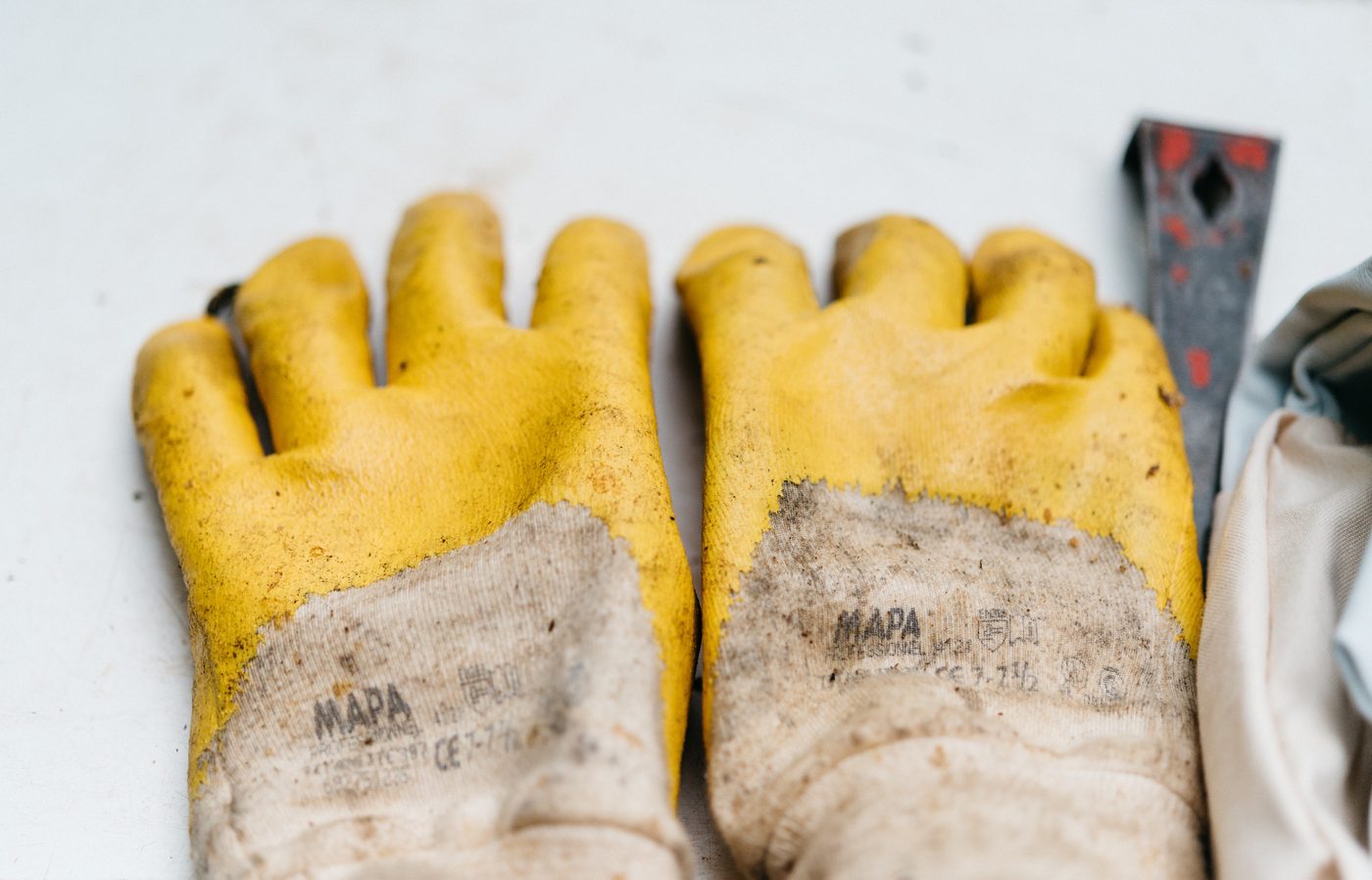
Pair of yellow work gloves used in carpentry (Source: Wikimedia Commons)
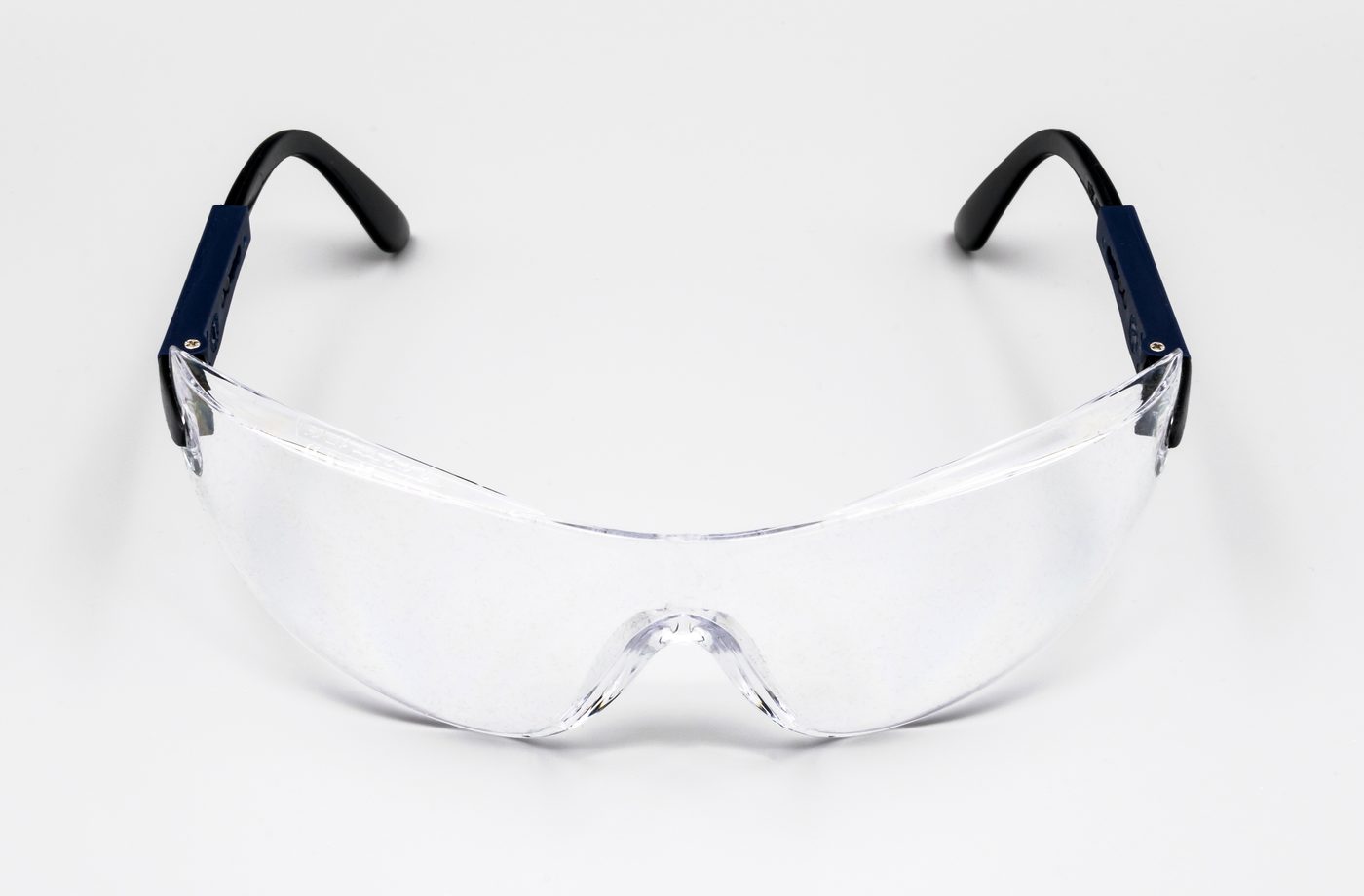
Clear safety goggles for eye protection (Source: Wikimedia Commons)
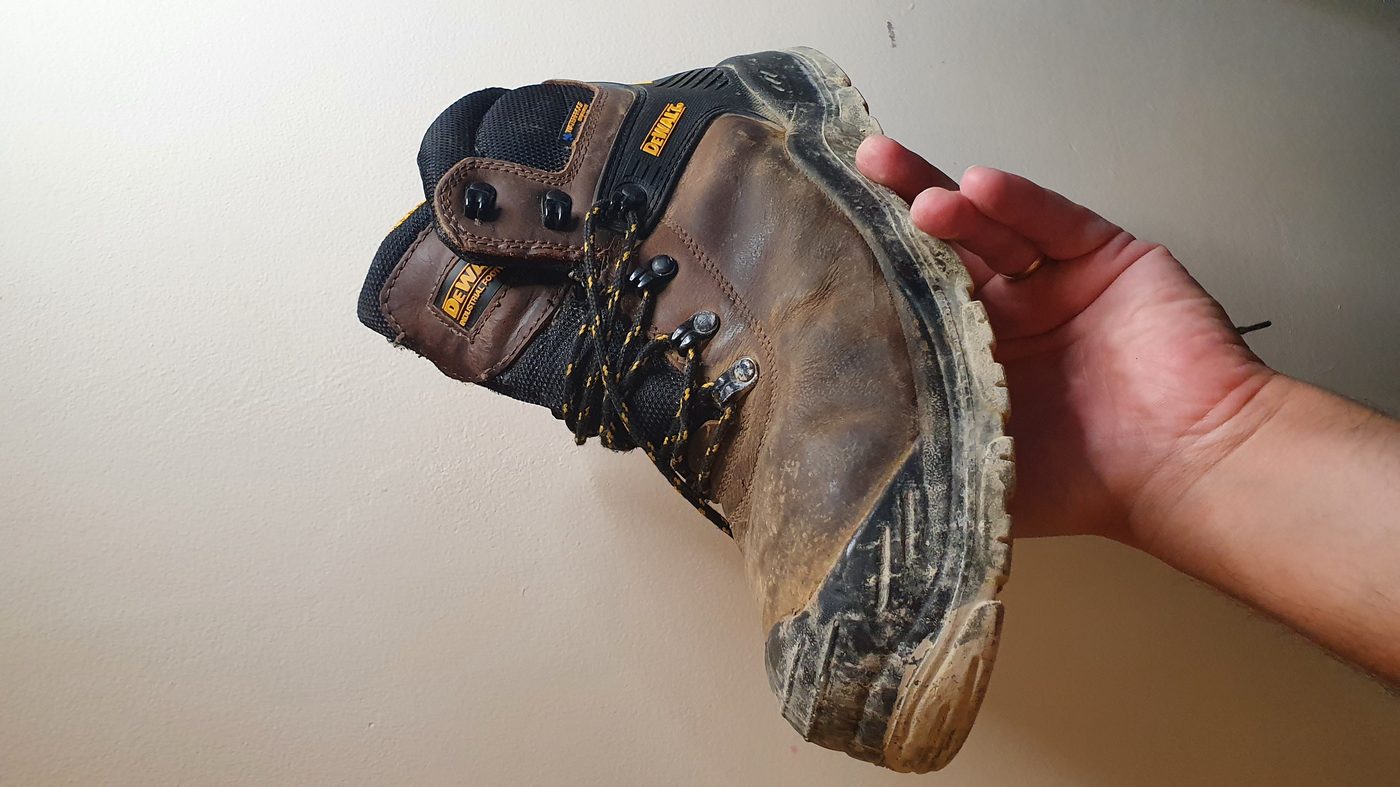
A single safety boot for industrial use (Source: Wikimedia Commons)
Safety requirements are not merely regulatory; they serve practical purposes that directly impact the quality and efficiency of masonry work.
Masonry workshops expose workers to specific hazards that must be managed through targeted controls.
Developing a proactive safety culture enhances overall workshop safety and performance.
Create a free account to open more of this chapter.
Free: practical guides, quick cards, workplace scenarios and more.
Create a free accountThis chapter focused on essential safety requirements within the workshop environment, emphasizing various types of safety measures and their practical uses to protect workers during masonry tasks. It then explored the different types of masonry hand tools, detailing their specific functions and how they facilitate manual masonry work. The discussion extended to masonry machine tools, highlighting the variety available and their applications in improving efficiency and precision in masonry operations. Maintenance of masonry tools was also covered, outlining effective methods to ensure tools remain in good working condition, thereby prolonging their lifespan and ensuring safety. Overall, the chapter provided a comprehensive overview of the tools and safety practices fundamental to carrying out masonry tasks effectively and responsibly.
Type: Individual
| Tools & Equipment | Materials |
|---|---|
| Mason Hammer | Protective Gloves |
| Steel Float | Dust Cover Overall |
| Flat Chisel | Safety Boots |
| Pointed Chisel | Helmet |
| Claw Tool | |
| 3-inch Nails | |
| 3-inch Wire Brush | |
| Mallet | |
| Spirit Level | |
| Tape Measure |
| S/N | Item | Quantity |
|---|---|---|
| 1 | Mason Hammer | 1 Pc per Candidate |
| 2 | Steel Float | 1 Pc per Candidate |
| 3 | Flat Chisel | 1 Pc per Candidate |
| 4 | Pointed Chisel | 1 Pc per Candidate |
| 5 | Claw Tool | 1 Pc per Candidate |
| 6 | 3-inch Nails | 3 Pcs per Candidate |
| 7 | 3-inch Wire Brush | 1 Pc per Candidate |
| 8 | Mallet | 1 Pc per Candidate |
| 9 | Spirit Level (600mm) | 1 Pc per Candidate |
| 10 | Tape Measure (3 m) | 1 Pc per Candidate |
| 11 | Protective Gloves | 1 Pair per Candidate |
| 12 | Dust Cover Overall | 1 Pc per Candidate |
| 13 | Safety Boots | 1 Pair per Candidate |
| 14 | Helmet | 1 Pc per Candidate |
| Items to be Evaluated | Marks Available | Marks Obtained | Comments |
|---|---|---|---|
| TASK 1: Safety and Tool Identification | |||
| Wore all required PPE (Helmet, Gloves, Dustcover, Safety Boots) (Award one mark for each PPE donned as per workplace procedures 4 x 1 =4 Marks) | 4 | ||
| Identified all masonry hand tools correctly (Award one mark for each correctly identified tool 5 x 1 = 5 Marks) | 5 | ||
| Sub-Total | 9 | ||
| TASK 2: Tool Use and Handling | |||
| Demonstrated correct use of Mason Hammer and Mallet (Award 2 marks for each tool used properly 2 x 2 =4 Marks) | 4 | ||
| Used chisels (Flat and Pointed) correctly for shaping stones (Award 2 marks for each chisel used correctly 2 x 2 =4 Marks) | 4 | ||
| Used Claw Tool properly for dressing stones (Award 3 marks for correct use of Claw Tool) | 3 | ||
| Measured and marked stone dimensions accurately using Tape Measure and 3-inch Nails (Award 3 marks for accurate measurement and marking) | 3 | ||
| Smoothed and finished stone surface using Steel Float and Wire Brush (Award 2 marks for smoothing and 2 marks for finishing) | 4 | ||
| Checked level and alignment using Spirit Level (Award 3 marks for correct use of Spirit Level) | 3 | ||
| Sub-Total | 21 | ||
| TASK 3: Housekeeping and Tool Care | |||
| Cleaned and stored tools correctly after use (Award 3 marks for proper cleaning and storage) | 3 | ||
| Cleared the working area according to safety standards (Award 2 marks for proper housekeeping) | 2 | ||
| Sub-Total | 5 | ||
| PRODUCT CHECKLIST | |||
| Stone wall section dimensions 600mm length x 300mm height (Award 5 marks for correct dimensions within ±5mm tolerance) | 5 | ||
| Surface finish uniform and smooth without cracks or dents (Award 5 marks for smooth and defect-free finish) | 5 | ||
| Edges properly shaped and straight (Award 4 marks for well-shaped and straight edges) | 4 | ||
| Level and alignment checked and within tolerance (Award 5 marks for correct level and alignment) | 5 | ||
| Sub-Total | 19 | ||
| GRAND TOTAL | 54 | ||
Type: Individual
| Tools & Equipment | Materials |
|---|---|
| Portable masonry saw | Concrete blocks (400mm x 200mm x 150mm) |
| Electric angle grinder with diamond blade | PPE: Helmet |
| Block splitter | PPE: Gloves |
| Measuring tape (3 m) | PPE: Dust mask |
| Chalk line | PPE: Safety boots |
| Hammer |
| S/N | Item | Quantity |
|---|---|---|
| 1 | Portable masonry saw | 1 pc per Candidate |
| 2 | Electric angle grinder with diamond blade | 1 pc per Candidate |
| 3 | Block splitter | 1 pc per Candidate |
| 4 | Measuring tape (3 m) | 1 pc per Candidate |
| 5 | Chalk line | 1 pc per Candidate |
| 6 | Hammer | 1 pc per Candidate |
| 7 | PPE: Helmet | 1 pc per Candidate |
| 8 | PPE: Gloves | 1 pair per Candidate |
| 9 | PPE: Dust mask | 1 pc per Candidate |
| 10 | PPE: Safety boots | 1 pair per Candidate |
| 11 | Concrete blocks (400mm x 200mm x 150mm) | 5 pcs per Candidate |
| Items to be Evaluated | Marks Available | Marks Obtained | Comments |
|---|---|---|---|
| TASK 1: Preparation and PPE use | |||
| Wore PPE correctly (Helmet, Gloves, Dust mask, Safety boots) (Award 1 mark for each PPE donned properly) | 4 | ||
| Inspected masonry machine tools for safety and functionality (Award 3 marks for complete and proper inspection) | 3 | ||
| Set up work area safely following OSHA guidelines (Award 3 marks for clear and safe setup) | 3 | ||
| Measured and marked block dimensions accurately with chalk line and tape measure (Award 5 marks for accurate marking of all 5 blocks) | 5 | ||
| Selected appropriate machine tool for each cutting/shaping task (Award 3 marks for correct tool selection and justification) | 3 | ||
| Sub-Total | 18 | ||
| TASK 2: Operation and shaping of concrete blocks | |||
| Used portable masonry saw to make straight cuts on blocks safely (Award 2 marks per block cut using saw correctly, max 6 marks) | 6 | ||
| Employed electric angle grinder with diamond blade for shaping edges (Award 2 marks per block shaped correctly, max 6 marks) | 6 | ||
| Applied block splitter to split blocks where required (Award 2 marks per block split properly, max 4 marks) | 4 | ||
| Maintained safe handling and control of tools during operation (Award 3 marks for continuous safe handling) | 3 | ||
| Sub-Total | 19 | ||
| TASK 3: Cleanup and tool care | |||
| Cleaned and stored masonry machine tools as per manufacturer’s instructions (Award 3 marks for proper cleaning and storage) | 3 | ||
| Cleared work area of debris and waste materials (Award 2 marks for thorough cleaning) | 2 | ||
| Disposed of waste materials in designated areas (Award 2 marks for correct disposal) | 2 | ||
| Sub-Total | 7 | ||
| PRODUCT CHECKLIST | |||
| Five concrete blocks cut to accurate dimensions (400mm x 200mm x 150mm) within ±5mm tolerance (Award 1 mark per block dimension accuracy) | 5 | ||
| Edges of blocks shaped smoothly and uniformly (Award 4 marks for uniform smooth edges) | 4 | ||
| Blocks free from cracks, chips, or damage caused by improper tool use (Award 4 marks for no visible damage) | 4 | ||
| Blocks suitable for immediate use in masonry work (Award 3 marks for overall suitability and finish) | 3 | ||
| Sub-Total | 16 | ||
| GRAND TOTAL | 60 | ||
At the start of this chapter we promised you would be able to:
Tick each one you can genuinely do.
So, are you there yet?
You're competent when you can confidently do 50% or more of what this chapter promised.
Sign in to record how you're doing.