
Building Technology  ·  Level 5
Building Superstructure Works
Chapter 2: Lay superstructure walls
📚 10 Topics
What you will be able to do

By the end of this chapter, you will be able to:

  • Wear the correct personal protective equipment safely and as required for the job.
  • Assemble all the necessary tools and equipment accurately for wall construction.
  • Identify the type of wall to be built by reading and understanding working drawing specifications.
  • Prepare walling materials correctly following the job requirements.
  • Lay screed accurately according to the working drawing specifications.
  • Lay out the damp proof course properly following the National Building Code 2024 requirements.
  • Safely erect a construction wall by following the correct work procedures.
  • Carry out curing of superstructure walls correctly in line with the National Building Code 2024.
  • Create superstructure wall openings accurately according to work requirements.
  • Perform clean-up, waste collection, and disposal safely and responsibly following NEMA regulations.

Mastering these skills ensures you build strong, safe, and durable walls that meet professional standards and protect the environment.

Building superstructure walls form the essential vertical framework that supports the floors, roof, and finishes of a building. In Kenya, the construction of these walls requires adherence to safety standards and the effective use of specialized tools and equipment to ensure durability and compliance with building codes. This chapter focuses on the personal protective equipment (PPEs) necessary for workers involved in wall construction and the tools and equipment commonly used in laying superstructure walls. Mastery of these topics enhances safety and productivity on construction sites such as those at county government offices or commercial buildings in Nairobi.

2.1 PPEs

The use of personal protective equipment (PPE) in building superstructure works is critical to safeguarding workers from injuries and health hazards associated with wall construction activities. In Kenyan construction sites, including hospitals and educational institutions, strict enforcement of PPE use reduces accidents and promotes compliance with the Occupational Safety and Health Act (OSHA). This section details the types, selection criteria, maintenance, and legal requirements of PPE relevant to laying superstructure walls.

2.1.1 Types of PPE Used in Superstructure Wall Construction

PPE in wall construction protects workers from physical, chemical, and environmental hazards encountered during tasks such as bricklaying, mortar mixing, and scaffolding.

Common PPE Items

  • Safety Helmets: Protect the head from falling objects and impacts, essential when working near scaffolds or handling heavy materials.

  • Safety Gloves: Provide hand protection against abrasions, cuts, and chemical exposure from cement and mortar.

  • Safety Boots: Typically steel-toed to prevent foot injuries from dropped tools or heavy blocks.
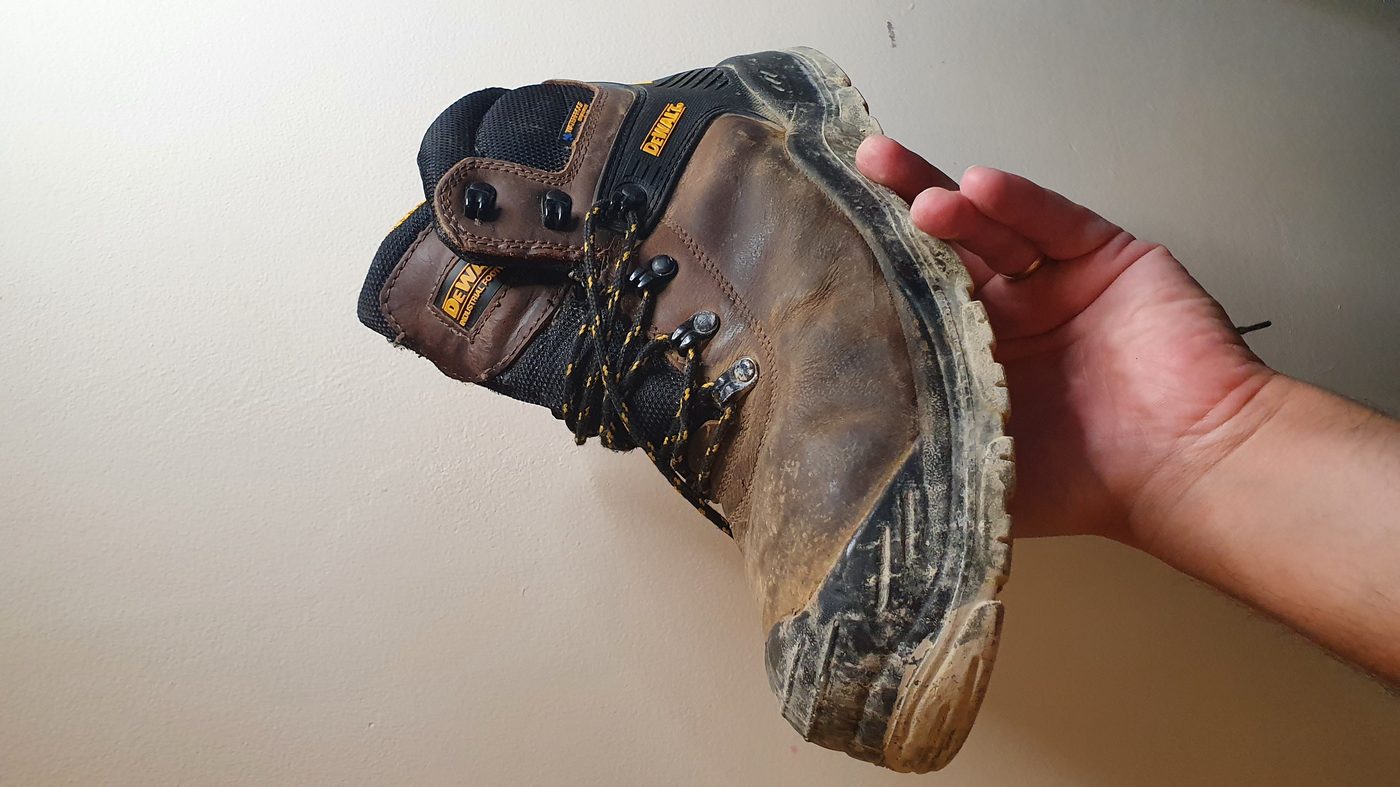
A single safety boot for industrial use
A single safety boot for industrial use (Source: Wikimedia Commons)
  • Eye Protection: Safety goggles shield eyes from dust, flying debris, and splashes of cement or lime.
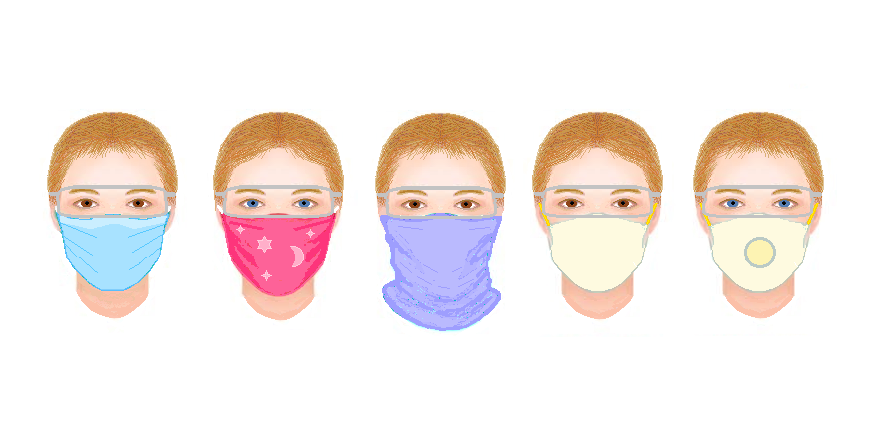
  • Respiratory Masks: Protect against inhalation of dust and fine particles generated during cutting or mixing.

Various types of respiratory masks on faces
Various types of respiratory masks on faces (Source: Wikimedia Commons)

  • High-Visibility Clothing: Ensures workers are visible to machinery operators and colleagues, especially on busy sites.

These PPE items are mandatory on construction sites such as retail businesses expanding their premises or county offices undertaking renovations.

2.1.2 Selection Criteria for PPE in Wall Construction

Choosing appropriate PPE depends on the specific risks present during wall construction, the nature of materials used, and environmental conditions.

Key Factors in PPE Selection

  • Risk Assessment: Identify hazards such as falling debris, sharp tools, dust, or chemical exposure before selecting PPE.
  • Comfort and Fit: PPE must fit well to ensure it is worn consistently; ill-fitting gloves or boots reduce dexterity and safety.
  • Durability: Materials should withstand rough site conditions; for example, gloves made of leather or rubber resist cement corrosion.
  • Compliance with Standards: PPE must meet Kenyan Bureau of Standards (KEBS) or international safety standards to guarantee effectiveness.
  • Ease of Maintenance: Equipment that is easy to clean and maintain encourages regular use and prolongs service life.

Construction supervisors at university expansion projects often conduct PPE audits to ensure compliance with these criteria.

2.1.3 Maintenance and Storage of PPE

Proper maintenance and storage of PPE extend its usability and ensure continuous worker protection on sites such as county hospitals or SACCO offices undergoing structural upgrades.

Maintenance Practices

  • Regular Cleaning: Helmets and goggles should be cleaned to remove dust and grime that can impair function.
  • Inspection for Damage: Gloves and boots must be inspected for tears or wear that compromise safety.
  • Replacement: PPE showing signs of deterioration or damage must be replaced promptly.
  • Storage: Store PPE in clean, dry areas away from direct sunlight and chemicals to prevent degradation.
  • Record Keeping: Maintain logs of PPE issuance, maintenance, and replacements to track compliance.

These practices reduce the risk of accidents caused by faulty equipment and ensure readiness during intense construction phases.

2.1.4 Legal and Regulatory Requirements for PPE Use

Kenyan construction projects must comply with OSHA regulations and the National Construction Authority (NCA) guidelines which mandate PPE use to protect workers.

Legal Obligations

  • Provision of PPE: Employers must provide appropriate PPE free of charge to all workers exposed to hazards.
  • Training: Workers should receive training on correct PPE use and maintenance.
  • Enforcement: Site managers must enforce PPE use and apply disciplinary measures for non-compliance.
  • Record Keeping: Documentation of PPE issuance and training must be maintained for inspection.
  • Penalties: Non-compliance can lead to fines, work stoppages, or legal action by regulatory authorities.

Practice Questions

  1. Explain the importance of selecting appropriate PPE for building superstructure wall construction. (6 marks)
  2. Identify and describe five types of PPE used in wall construction and their specific protective functions. (10 marks)
  3. Outline the maintenance practices necessary to ensure the longevity and effectiveness of PPE on a construction site. (6 marks)
  4. Discuss the legal responsibilities of employers regarding PPE provision and enforcement on Kenyan construction sites. (8 marks)
The rest of this chapter
🔒

Create a free account to open more of this chapter.

Free: practical guides, quick cards, workplace scenarios and more.

Create a free account
🔒2.2 Wall Construction Tools and Equipment

Efficient and safe construction of superstructure walls requires specialized tools and equipment designed to handle masonry materials and support precise workmanship. In Kenya, construction projects at institutions such as banks or hotels depend on these tools…

🔒2.3 Wall construction

In the Kenyan building industry, wall construction is a critical phase that determines the structural integrity, durability, and aesthetics of a building. Superstructure walls form the vertical elements that support floors and roofs, resist lateral forces, and…

🔒2.4 Walling materials

Selecting appropriate walling materials is fundamental to achieving structural strength, durability, and aesthetic appeal in building superstructures. In Kenya, availability, cost, and performance under local environmental conditions influence material choice.…

🔒2.5 Screed

In building superstructure works, screed plays a vital role in creating a smooth, level surface over the structural base, preparing it for final floor finishes. In Kenya, screed application is crucial in residential buildings, schools, and hospitals where even…

🔒2.6 DPC

Damp Proof Course (DPC) is an essential element in building superstructures to prevent moisture rising through walls and floors, which can cause structural damage and health hazards. In Kenya's varied climate, especially in coastal and high rainfall regions, D…

🔒2.7 Erection of Construction Wall

Erecting a construction wall is a critical phase in building superstructure works that demands precision, skill, and adherence to safety and quality standards. In Kenya’s building industry, whether constructing walls for county government offices or private re…

🔒2.8 Waste Materials

Construction waste management is a significant aspect of building superstructure works that affects project costs, environmental impact, and site safety. In Kenya, effective handling of waste materials during construction, such as at county government building…

🔒2.9 Superstructure Wall Opening

In building superstructure works, wall openings are critical features designed to accommodate doors, windows, ventilation, and services such as electrical conduits and plumbing. In Kenya, proper planning and execution of wall openings ensure structural integri…

🔒2.10 Superstructure Wall Curing

Curing is a crucial process in the construction of superstructure walls, especially those made from concrete blocks or reinforced concrete elements. In Kenya’s varied climate, proper curing ensures the development of strength, durability, and resistance to env…

Chapter Summary

This chapter covered essential aspects of laying superstructure walls, beginning with the types and uses of personal protective equipment necessary for safe construction work. It then examined the various tools and equipment employed in wall construction, detailing their specific functions. The chapter explored different types of walls including external, partitioning, and cavity walls, highlighting their distinct construction methods. Key walling materials were discussed, such as cement, fine aggregate, walling units, hoop iron, and water, emphasizing their roles in ensuring structural integrity. The importance of screed and damp-proof course (DPC) in wall construction was also addressed to prevent moisture-related issues. Procedures for erecting construction walls were outlined, along with considerations for managing waste materials and opportunities for their reuse. Finally, the chapter concluded with guidance on creating wall openings and the critical practice of curing superstructure walls to achieve durability and strength.

Self-Assessment

🔒 PDFDownload this self-assessment, with answers

A. Written Assessment

  1. Identify five types of personal protective equipment (PPE) commonly used during superstructure wall construction. (5 marks)
  2. Explain the primary uses of safety helmets and safety boots on a building site. (4 marks)
🔒28 more in this section.

Chapter Examination Questions

🔒 PDFDownload these examination questions, with model answers

SECTION A (40 Marks) - Answer ALL Questions

  1. Identify five types of personal protective equipment (PPE) commonly used in building superstructure wall construction and briefly describe their primary use. (4 marks)
  2. Explain the purpose of hoop iron in superstructure walling and how it contributes to the wall’s strength. (4 marks)
🔒18 more in this section.

Chapter Practical Activities

Practical 1: Identify and Use Personal Protective Equipment for Wall Construction

Building Technology · Level 5
Building Superstructure Works
PRACTICAL ASSESSMENT
TIME: 3 HOURS
⬇ PDFCandidate Instructions (Candidate Tool)

Type: Individual

INSTRUCTIONS TO CANDIDATE:
1.  You are required to perform the following task:
i.  Identify and correctly use appropriate personal protective equipment for wall construction activities on site.
2.  You have been provided with the following resources for the practical task:
Tools & EquipmentMaterials
Safety boots
Safety helmet
Protective gloves
Dust mask
Safety goggles
⬇ PDFResources Required (Cutting List)
S/NItemQuantity
1Safety boots1 Pair per Candidate
2Safety helmet1 Pc per Candidate
3Protective gloves1 Pair per Candidate
4Dust mask1 Pc per Candidate
5Safety goggles1 Pair per Candidate
⬇ PDFAssessor Guide
Items to be EvaluatedMarks AvailableMarks ObtainedComments
TASK 1: PPE Selection and Usage
Selected safety boots and wore them correctly
(Award 1 mark for correctly worn safety boots, 0 if not)
3
Selected safety helmet and wore it securely
(Award 1 mark for correctly worn helmet, 0 if not)
3
Selected protective gloves and wore them properly
(Award 1 mark for correctly worn gloves, 0 if not)
3
Used dust mask correctly covering nose and mouth
(Award 1 mark for correct use of dust mask, 0 if not)
3
Wore safety goggles properly during wall construction activity
(Award 1 mark for correct use of goggles, 0 if not)
3
Demonstrated understanding of PPE purpose and safety importance
(Award up to 5 marks for clear explanation and demonstration)
5
Sub-Total20
PRODUCT CHECKLIST
Properly worn and used PPE throughout the wall construction activity
(Award up to 10 marks for consistent and correct PPE use)
10
Sub-Total10
GRAND TOTAL30
ASSESSMENT OUTCOME:   ☐ Competent    ☐ Not Yet Competent (competent if at least 50%)

Practical 2: Select and use wall construction tools and equipment for a 1390mm x 710mm concrete block wall

Building Technology · Level 5
Building Superstructure Works
PRACTICAL ASSESSMENT
TIME: 4 HOURS
⬇ PDFCandidate Instructions (Candidate Tool)

Type: Individual

INSTRUCTIONS TO CANDIDATE:
1.  You are required to perform the following task:
i.  Select and use appropriate wall construction tools and equipment to build a concrete block wall 1390mm long by 710mm high.
2.  You have been provided with the following resources for the practical task:
Tools & EquipmentMaterials
Mason's squareConcrete blocks (450x150x225mm)
Spirit levelSand
Tape measureWater
TrowelLime
Plumb bob
Builder's line
Wheelbarrow
Water container
Personal Protective Equipment (PPE)
⬇ PDFResources Required (Cutting List)
S/NItemQuantity
1Mason's square1 Pc per Candidate
2Spirit level1 Pc per Candidate
3Tape measure1 Pc per Candidate
4Trowel2 Pcs per Candidate
5Plumb bob1 Pc per Candidate
6Builder's line1 Pc per Candidate
7Wheelbarrow1 Pc per 3 Candidates
8Water container1 Pc per Candidate
9Personal Protective Equipment (PPE) set (safety boots, gloves, helmet)1 Set per Candidate
10Concrete blocks (450x150x225mm)20 Pcs per Candidate
11Sand1 Bag per 3 Candidates
12WaterSufficient for mixing mortar
13Lime1 Kg per Candidate
⬇ PDFAssessor Guide
Items to be EvaluatedMarks AvailableMarks ObtainedComments
TASK 1: Selection and Use of Wall Construction Tools and Equipment
Donning personal protective equipment (PPE) including safety boots, gloves, and helmet
(Award 1 mark for each correctly worn PPE item = 3 Marks)
3
Identifying and gathering correct tools and equipment for wall construction
(Award 1 mark for each correctly identified tool up to 3 marks)
3
Setting out wall dimensions using tape measure and builder's line
(Award marks for accurate setting out according to drawing = 4 Marks)
4
Using spirit level and plumb bob correctly to check level and plumb during laying
(Award marks for correct and consistent use = 4 Marks)
4
Applying mortar and laying concrete blocks with trowel
(Award marks for proper mortar application and block laying technique = 5 Marks)
5
Cleaning and maintaining tools and equipment after use
(Award marks for proper cleaning and storage = 2 Marks)
2
Sub-Total21
PRODUCT CHECKLIST
Wall length dimension of 1390mm as per drawing
(Award 3 marks for correct length within tolerance)
3
Wall height dimension of 710mm as per drawing
(Award 3 marks for correct height within tolerance)
3
Wall thickness uniform and matching block dimensions (450mm block length aligned)
(Award 3 marks for uniform thickness and neatness)
3
Vertical joints flushed and horizontal joints keyed properly
(Award 4 marks for neat and uniform joints)
4
Wall plumbness checked at three points using plumb bob
(Award 1 mark per correctly plumbed point = 3 Marks)
3
Wall straightness and squareness verified
(Award 3 marks for correct squareness and straightness)
3
Completeness and overall neatness of the constructed wall
(Award 3 marks for complete and neat finish)
3
Sub-Total22
GRAND TOTAL43
ASSESSMENT OUTCOME:   ☐ Competent    ☐ Not Yet Competent (competent if at least 50%)
🔒

Free: practical guides, quick cards, workplace scenarios and more.

Create a free account
🔒Prepare mortar mix for superstructure wallingPractical 3
🔒Prepare and lay screed base for superstructure wallPractical 4
🔒Install damp proof course (DPC) in wall basePractical 5
🔒Construct external wall using concrete blocksPractical 6
🔒Construct partition wall using concrete blocksPractical 7
🔒Construct a cavity wall using concrete blocksPractical 8
🔒Install hoop iron reinforcement in a 450mm thick concrete block wallPractical 9
🔒Set Out and Erect a 1390mm x 710mm x 400mm Concrete Block Superstructure WallPractical 10
🔒Form and finish door and window openings in superstructure wallPractical 11
🔒Cure a superstructure wall 1390mm x 710mm x 400mm as per specificationsPractical 12
🔒Identify and Sort Waste Materials from Wall ConstructionPractical 13
🔒Reuse Waste Materials in Constructing a 1390mm x 710mm x 400mm Wall SectionPractical 14
🔒Prepare and lay mortar bed for walling unitsPractical 15
Flashcards 20 cards Study deck ▾
Question
1

↻ Tap card to reveal answer
🔒

18 more in this section.

Create a free account
Test Yourself 18 questions Start quiz ▾
0%
0 / 2
🔒

16 more in this section.

Create a free account
Am I competent?

At the start of this chapter we promised you would be able to:

  • Wear the correct personal protective equipment safely and as required for the job.
  • Assemble all the necessary tools and equipment accurately for wall construction.
  • Identify the type of wall to be built by reading and understanding working drawing specifications.
  • Prepare walling materials correctly following the job requirements.
  • Lay screed accurately according to the working drawing specifications.
  • Lay out the damp proof course properly following the National Building Code 2024 requirements.
  • Safely erect a construction wall by following the correct work procedures.
  • Carry out curing of superstructure walls correctly in line with the National Building Code 2024.
  • Create superstructure wall openings accurately according to work requirements.
  • Perform clean-up, waste collection, and disposal safely and responsibly following NEMA regulations.

Tick each one you can genuinely do.

So, are you there yet?

You're competent when you can confidently do 50% or more of what this chapter promised.

Sign in to record how you're doing.