
Welding  ·  Level 6
Gas Welding, Soldering And Brazing
Chapter 2: Carry out gas welding
📚 14 Topics
What you will be able to do

By the end of this chapter, you will be able to:

  • Follow occupational health and safety standards correctly to keep yourself and others safe on the job.
  • Accurately read and understand working drawings, making sure you follow drawing standards.
  • Correctly assemble gas welding machines, tools, and equipment needed for each task.
  • Prepare welding materials properly according to the specific job requirements.
  • Identify and set the correct gas welding parameters for each welding task.
  • Perform gas welding on metals up to 16 mm thick in all positions, meeting the job requirements.
  • Inspect your gas welds carefully to ensure they meet quality and job standards.
  • Finish gas welded products neatly and correctly as required.
  • Carry out housekeeping tasks properly to maintain a clean and safe work area.

Mastering these skills will help you work safely, efficiently, and professionally in the welding trade!

Gas welding is a fundamental skill applied in a variety of professional settings across Kenya, from maintenance work in county hospitals to fabrication tasks in retail businesses and agricultural cooperatives. Mastery of gas welding enables technicians to join metals safely and efficiently, supporting infrastructure development and repair in diverse sectors. This chapter focuses on the essential occupational health and safety standards that govern gas welding, as well as the identification and management of associated hazards, ensuring that practitioners can perform their duties without compromising their wellbeing or that of others.

2.1 Occupational Health and Safety Standards

The practice of gas welding requires strict adherence to occupational health and safety standards to prevent accidents and injuries in the workplace. Kenyan workplaces such as universities, county government offices, and hotels implement these standards to safeguard their employees and maintain productivity. Understanding workshop rules, regulations, and the correct use of personal protective equipment (PPE) is critical for all gas welders.

2.1.1 Workshop Rules and Regulations

Workshop rules and regulations create a structured environment that minimizes risks and promotes safe welding practices. These rules are developed in line with national occupational safety laws and tailored to the specific hazards of gas welding operations.

Key Elements of Workshop Rules

  • Restricted Access to Welding Areas: Only authorized personnel with proper training are allowed near welding stations to reduce the risk of accidents. For instance, at a county referral hospital’s maintenance workshop, limiting access helps protect non-technical staff from exposure to welding fumes and sparks.
  • Proper Storage of Gas Cylinders: Gas cylinders must be stored upright, secured, and away from heat sources to prevent leaks or explosions. In an agricultural cooperative’s workshop, adherence to this rule is critical since oxygen and acetylene cylinders are commonly used.
  • Maintenance of Equipment: Regular checks and servicing of welding equipment ensure that leaks, faulty hoses, or damaged regulators are identified early. This practice is common in university workshops where equipment longevity and safety are priorities.
  • Clear Signage and Emergency Procedures: Welding areas should have visible warning signs and accessible fire extinguishers, alongside clearly communicated emergency evacuation plans. Hotels with in-house maintenance teams often display these to comply with safety regulations.
  • No Smoking Policy: Smoking is strictly prohibited near welding areas to eliminate fire hazards. This rule is enforced in retail business workshops to protect both workers and customers.

2.1.2 Personal Protective Equipment in Gas Welding

Personal protective equipment is the last line of defense against the inherent risks of gas welding. Proper PPE selection and use are vital for protecting welders from burns, eye injuries, and inhalation of harmful fumes.
Essential PPE Components and Their Roles

  • Welding Helmet with Filter Lens: Protects the eyes and face from intense light, ultraviolet rays, and flying sparks. For example, maintenance technicians at a county government office use helmets with adjustable lenses to accommodate different welding intensities.
  • Flame-Resistant Gloves: Provide thermal protection and prevent burns from hot metal and sparks. SACCO workshop staff handling welding tasks rely on these gloves to perform safely.
  • Protective Clothing: Long-sleeved, flame-resistant jackets and trousers shield the body from heat and molten metal splatter. University laboratories enforce this to maintain compliance with safety standards.
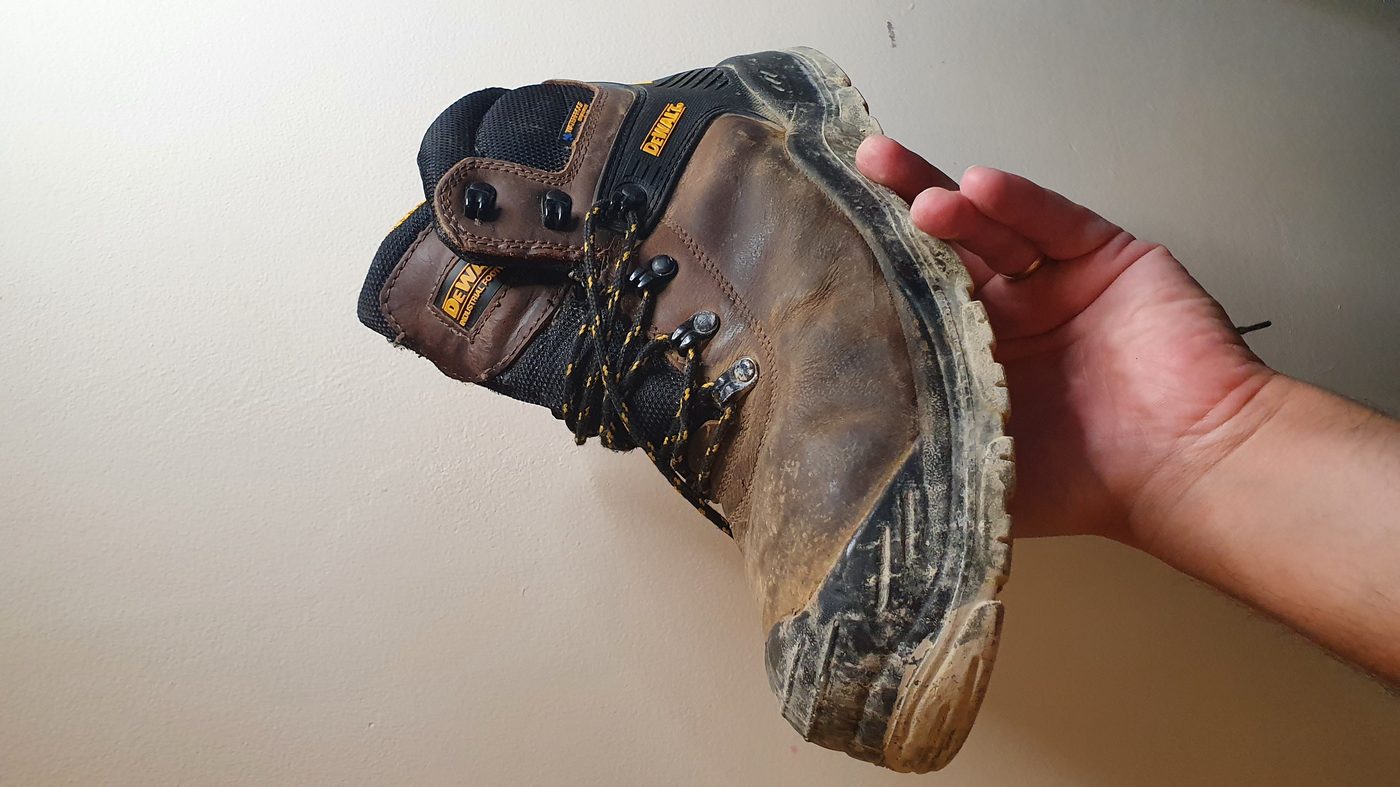
  • Safety Boots: Steel-toed boots protect feet from heavy falling objects and hot debris. At a retail business’s repair workshop, these boots are mandatory for all staff involved in welding activities.

A single safety boot for industrial use
A single safety boot for industrial use (Source: Wikimedia Commons)

  • Respiratory Protection: Masks or respirators filter out harmful fumes and gases produced during welding. Healthcare facilities like county hospitals require welders to use respirators when working in confined or poorly ventilated spaces.
The rest of this chapter
🔒

Create a free account to open more of this chapter.

Free: practical guides, quick cards, workplace scenarios and more.

Create a free account
🔒2.2 Gas Welding Hazards

Gas welding involves several hazards that can lead to serious injuries or health issues if not properly managed. Recognizing the types of hazards and implementing effective controls is essential for maintaining a safe working environment. Gas welding hazards c…

🔒2.3 Gas welding machines and tools safety

In Kenyan workplaces where gas welding is performed, such as county government workshops or university technical departments, safety is paramount to prevent accidents that could cause injuries, property damage, or operational downtime. Gas welding involves the…

🔒2.4 Housekeeping in gas welding

Housekeeping in gas welding workshops is vital to maintain a safe, efficient, and productive working environment. Proper storage, cleaning, and waste management prevent accidents, improve workflow, and comply with workplace safety regulations applicable in var…

🔒2.5 Gas welding equipment and accessories

Gas welding is a versatile joining technique widely used across various Kenyan industries such as manufacturing, maintenance workshops in county governments, and even in agricultural machinery repairs. Understanding the equipment and accessories involved is cr…

🔒2.6 Gas welding tools

Gas welding tools encompass the hand tools and instruments used to prepare, execute, and finish welding tasks. The choice of tools influences the quality of the weld, operator comfort, and overall efficiency, especially in diverse settings such as university e…

🔒2.7 Welding Material Preparation (Steel up to 6 mm Thickness)

Proper preparation of welding materials is essential for achieving strong, clean, and durable welds, especially when working with steel up to 6 mm thick. In Kenyan industries such as county referral hospitals or retail manufacturing units, inadequate preparati…

🔒2.8 Gas welding parameters

Gas welding involves the fusion of metals using a flame produced by burning a mixture of fuel gas and oxygen. Successful gas welding requires careful control of parameters to achieve strong, defect-free joints. In Kenyan industries such as county government fa…

🔒2.9 Materials (steel up to 6 mm thickness)

Gas welding is widely applied in joining steel components up to 6 mm thick, common in many Kenyan workplaces such as agricultural cooperatives' machinery repair shops or retail store metal shelving fabrication. Understanding the behavior of steel in welding an…

🔒2.10 Welding positions

In gas welding, the position in which the welder holds the workpiece and torch significantly impacts the quality, accessibility, and safety of the weld. Understanding different welding positions enables technicians across various Kenyan industries, such as cou…

🔒2.11 Weld joints

The joint design in welding determines the strength, efficiency, and suitability of the welded assembly. Different types of weld joints cater to various structural and functional requirements encountered in Kenyan industries, from county government infrastruct…

🔒2.12 Gas welding faults

Gas welding faults are imperfections that occur during the welding process, affecting the quality, strength, and appearance of the weld joint. In various Kenyan workplaces such as county hospitals, manufacturing workshops in retail businesses, and university e…

🔒2.13 Gas welding defects

Gas welding defects refer to imperfections that reduce the mechanical properties or appearance of the weld but may not always constitute faults that cause immediate failure. These defects can affect service life and performance of welded components in sectors…

🔒2.14 Finishing processes in gas welding

Finishing processes in gas welding are crucial to ensure the structural integrity, aesthetic quality, and functional performance of welded joints. In Kenyan industries such as county hospitals, retail workshops, and agricultural cooperatives, the quality of we…

Chapter Summary

This chapter covered the essential occupational health and safety standards necessary for gas welding, including workshop rules and the proper use of personal protective equipment. It examined the various hazards associated with gas welding and effective methods for hazard control to ensure a safe working environment. Safety considerations for gas welding machines and tools were discussed alongside the importance of good housekeeping practices such as proper storage of tools and materials, workshop cleaning, and waste disposal. The chapter detailed the main gas welding equipment and accessories, including oxygen, acetylene, and propane cylinders, welding torches, regulators, hoses, and jigs, with guidance on their correct use and maintenance. It also explored the types of gas welding tools, their specific uses, and care requirements. The preparation of welding materials, particularly steel up to 6 mm thick, was explained through measuring, marking out, cutting, and edge preparation techniques. Key gas welding parameters, such as working pressure and oxygen-fuel ratio, were outlined to optimize welding performance. Finally, the chapter described different welding positions, weld joint types, common welding faults and defects with their causes and preventive measures, and finishing processes including polishing, grinding, varnishing, oil blacking, deburring, and painting to ensure quality welds.

Self-Assessment

🔒 PDFDownload this self-assessment, with answers

A. Written Assessment

  1. What is the primary purpose of personal protective equipment (PPE) in gas welding? (2 marks)
  2. Identify three common hazards associated with gas welding and briefly describe how each can be controlled. (6 marks)
🔒20 more in this section.

Chapter Examination Questions

🔒 PDFDownload these examination questions, with model answers

SECTION A (40 Marks) - Answer ALL Questions

  1. At a county referral hospital workshop, what are three essential personal protective equipment items a gas welder must wear to ensure safety? (4 marks)
  2. Describe two common hazards associated with gas welding and explain how they can be controlled in a university fabrication workshop. (4 marks)
🔒18 more in this section.

Chapter Practical Activities

Practical 1: Identify and control hazards in gas welding setup

Welding · Level 6
Gas Welding, Soldering And Brazing
PRACTICAL ASSESSMENT
TIME: 3 HOURS
⬇ PDFCandidate Instructions (Candidate Tool)

Type: Individual

INSTRUCTIONS TO CANDIDATE:
1.  You are required to perform the following task:
i.  Inspect and identify hazards in a gas welding setup and implement appropriate control measures to ensure safe operation as per workplace safety standards.
2.  You have been provided with the following resources for the practical task:
Tools & EquipmentMaterials
Complete gas welding equipment with accessories
Oxygen cylinder
Acetylene cylinder
Gas welding hoses (oxygen and acetylene)
Welding blowpipe/torch
Leather gloves
Leather apron
Safety boots
Welding goggles
Fire extinguisher (CO2 or dry powder)
Work bench/table
Gas leak detection solution
Fire resistant blankets
⬇ PDFResources Required (Cutting List)
S/NItemQuantity
1Complete gas welding equipment with accessories1 set per Candidate
2Oxygen cylinder1 per Candidate
3Acetylene cylinder1 per Candidate
4Gas welding hoses (oxygen and acetylene)1 set per Candidate
5Welding blowpipe/torch1 per Candidate
6Leather gloves1 pair per Candidate
7Leather apron1 per Candidate
8Safety boots1 pair per Candidate
9Welding goggles1 pair per Candidate
10Fire extinguisher (CO2 or dry powder)1 per Candidate
11Work bench/table1 per Candidate
12Gas leak detection solution1 bottle per 3 Candidates
13Fire resistant blankets1 per Candidate
⬇ PDFAssessor Guide
Items to be EvaluatedMarks AvailableMarks ObtainedComments
TASK 1: Identification of Gas Welding Hazards
Wore prescribed PPE correctly (welding goggles, leather gloves, leather apron, safety boots)
(Award 1 mark for each PPE worn correctly, or 0)
4
Checked gas cylinders for proper storage and secure positioning
(Award 1 mark if cylinders are upright and secured, 0 otherwise)
1
Inspected hoses for leaks, cracks, and proper connections
(Award 1 mark if hoses are leak-free and properly connected, 0 otherwise)
1
Used gas leak detection solution to check for leaks at connections
(Award 1 mark if leak test performed correctly, 0 otherwise)
1
Verified correct pressure settings on oxygen and acetylene regulators
(Award 1 mark if pressure settings are within safe limits, 0 otherwise)
1
Ensured fire safety equipment (fire extinguisher and fire blanket) are accessible and functional
(Award 1 mark if fire safety equipment is present and accessible, 0 otherwise)
1
Cleared work area of flammable materials and ensured good ventilation
(Award 1 mark if area is clear and ventilated, 0 otherwise)
1
Followed correct procedure for lighting the torch safely (opened acetylene first, then oxygen)
(Award 1 mark if proper lighting sequence followed, 0 otherwise)
1
Demonstrated correct procedure for shutting off the torch safely (closed acetylene valve before oxygen)
(Award 1 mark if proper shutting off sequence followed, 0 otherwise)
1
Properly closed down the gas cylinders and drained hoses
(Award 1 mark if cylinders and hoses closed and drained correctly, 0 otherwise)
1
Hung up welding blowpipe and hoses safely after use
(Award 1 mark if equipment hung safely, 0 otherwise)
1
Sub-Total14
TASK 2: Implementation of Hazard Control Measures
Applied appropriate hazard control measures to eliminate or reduce identified risks
(Award 1 mark each for at least three correct control measures implemented, 0 otherwise)
3
Demonstrated safe handling and storage of gas cylinders
(Award 1 mark if cylinders handled and stored safely, 0 otherwise)
1
Ensured proper personal hygiene and workspace cleanliness
(Award 1 mark if work area is clean and candidate follows hygiene practices, 0 otherwise)
1
Communicated identified hazards and safety measures to peers or supervisor
(Award 1 mark if communication is evident, 0 otherwise)
1
Sub-Total6
PRODUCT CHECKLIST
Completed hazard identification report or checklist accurately
(Award 3 marks for a complete and accurate hazard identification report, 0 otherwise)
3
Implemented hazard control measures effectively as observed in the setup
(Award 3 marks if control measures are correctly implemented and evident, 0 otherwise)
3
Sub-Total6
GRAND TOTAL26
ASSESSMENT OUTCOME:   ☐ Competent    ☐ Not Yet Competent (competent if at least 50%)

Practical 2: Organize and Clean Gas Welding Workshop According to Safety and Housekeeping Standards

Welding · Level 6
Gas Welding, Soldering And Brazing
PRACTICAL ASSESSMENT
TIME: 4 HOURS
⬇ PDFCandidate Instructions (Candidate Tool)

Type: Individual

INSTRUCTIONS TO CANDIDATE:
1.  You are required to perform the following task:
i.  Organize and clean the gas welding workshop area including tools, materials, waste disposal, and floor space to comply with workshop safety and housekeeping standards.
2.  You have been provided with the following resources for the practical task:
Tools & EquipmentMaterials
Complete gas welding equipment with accessoriesWaste disposal bins
Leather glovesStorage racks for tools and materials
Leather apron
Safety boots
Welding goggles
Wire brush
Chipping hammer
Cleaning cloths and brushes
⬇ PDFResources Required (Cutting List)
S/NItemQuantity
1Complete gas welding equipment with accessories1 set per Candidate
2Leather gloves1 pair per Candidate
3Leather apron1 per Candidate
4Safety boots1 pair per Candidate
5Welding goggles1 pair per Candidate
6Wire brush1 per Candidate
7Chipping hammer1 per Candidate
8Waste disposal bins (clearly labelled)1 set per Workshop
9Cleaning cloths and brushes1 set per Candidate
10Storage racks for tools and materials1 set per Workshop
⬇ PDFAssessor Guide
Items to be EvaluatedMarks AvailableMarks ObtainedComments
TASK 1: Adherence to Workshop Safety Rules
Wore welding goggles correctly
(Award 1 or 0 mark)
1
Wore safety boots correctly
(Award 1 or 0 mark)
1
Wore leather gloves correctly
(Award 1 or 0 mark)
1
Wore leather apron correctly
(Award 1 or 0 mark)
1
Sub-Total4
TASK 2: Workshop Organization and Housekeeping
Cleared floor area free of debris and hazards
(Award 1 or 0 mark)
1
Returned gas welding equipment and accessories to designated storage
(Award 1 or 0 mark)
1
Arranged tools (wire brush, chipping hammer) neatly on storage racks
(Award 1 or 0 mark)
1
Segregated waste correctly into labelled waste disposal bins
(Award 1 or 0 mark)
1
Disposed waste according to workshop procedures
(Award 1 or 0 mark)
1
Sub-Total5
PRODUCT CHECKLIST
Workshop area left clean, tools stored properly, and waste segregated as per safety and housekeeping standards
(Award 5 or 0 marks)
5
Sub-Total5
GRAND TOTAL14
ASSESSMENT OUTCOME:   ☐ Competent    ☐ Not Yet Competent (competent if at least 50%)
🔒

Free: practical guides, quick cards, workplace scenarios and more.

Create a free account
🔒Safe Handling and Inspection of Gas Welding EquipmentPractical 3
🔒Handle and inspect oxygen and fuel gas cylinders for safe usePractical 4
🔒Set up and maintain gas welding torch and regulators for safe operationPractical 5
🔒Use and maintain gas welding hand toolsPractical 6
🔒Prepare steel plates and pipes up to 6 mm thickness for gas weldingPractical 7
🔒Set and adjust gas welding parameters for optimal flamePractical 8
🔒Perform gas welding of a butt joint on mild steel plates in flat positionPractical 9
🔒Perform lap joint gas welding on steel platesPractical 10
🔒Perform Corner and T-Joint Gas Welding on Steel ComponentsPractical 11
🔒Perform cruciform joint gas welding on mild steel platesPractical 12
🔒Identify and Prevent Common Gas Welding FaultsPractical 13
🔒Identify and Correct Gas Welding Defects on a Mild Steel Butt JointPractical 14
🔒Finish welded joints by polishing and grinding on mild steel platesPractical 15
Flashcards 20 cards Study deck ▾
Question
1

↻ Tap card to reveal answer
🔒

18 more in this section.

Create a free account
Test Yourself 19 questions Start quiz ▾
0%
0 / 2
🔒

17 more in this section.

Create a free account
Am I competent?

At the start of this chapter we promised you would be able to:

  • Follow occupational health and safety standards correctly to keep yourself and others safe on the job.
  • Accurately read and understand working drawings, making sure you follow drawing standards.
  • Correctly assemble gas welding machines, tools, and equipment needed for each task.
  • Prepare welding materials properly according to the specific job requirements.
  • Identify and set the correct gas welding parameters for each welding task.
  • Perform gas welding on metals up to 16 mm thick in all positions, meeting the job requirements.
  • Inspect your gas welds carefully to ensure they meet quality and job standards.
  • Finish gas welded products neatly and correctly as required.
  • Carry out housekeeping tasks properly to maintain a clean and safe work area.

Tick each one you can genuinely do.

So, are you there yet?

You're competent when you can confidently do 50% or more of what this chapter promised.

Sign in to record how you're doing.