Constructing appropriate structures for beef cattle is a foundational aspect of effective cattle management in Kenya. Well-designed cattle structures ensure animal welfare, ease of management, and productivity, which are critical for farms ranging from smallholder cooperatives to large commercial ranches. This chapter explores the essential tools and equipment required to build these structures, providing practical insights applicable across various professional fields including agriculture, hospitality farms, and county government agricultural departments.
1.1 Tools and Equipment
In Kenya, the construction of beef cattle structures requires specific tools and equipment that facilitate durable and safe builds suited to local conditions. These tools not only determine the quality of the finished structure but also influence the efficiency and safety of the construction process. For example, at a county government agricultural office in Nakuru, proper use of construction tools has improved the turnaround time for building cattle pens, enhancing livestock management.
1.1.1 Essential Hand Tools for Beef Cattle Structure Construction
Hand tools are fundamental for precision tasks and finishing work in cattle structure construction. Their selection depends on the construction phase and materials used, such as timber, metal, or concrete.
Essential Hand Tools
-
Hammer: Used for driving nails and assembling wooden frames, hammers must have a comfortable grip and balanced weight to reduce fatigue during prolonged use.
-
Handsaw: Suitable for cutting timber to size, a handsaw with a fine-toothed blade ensures clean cuts essential for strong joints.
- Measuring Tape: Accurate measurements are critical for building safe cattle pens; a durable steel measuring tape with clear markings is preferred.

A measuring tape with metric and imperial units (Source: Wikimedia Commons)
-
Spirit Level: Ensures walls and posts are vertically and horizontally aligned, preventing structural weaknesses.
-
Pliers: Useful for bending wire and pulling out nails, pliers are indispensable when working with metal fencing or wire mesh.
1.1.2 Power Tools and Machinery for Efficient Construction
Power tools accelerate the construction process and improve accuracy but require skilled operation and safety precautions. Their use is common in commercial farms and agricultural training institutions.
Common Power Tools
-
Electric Drill: Facilitates drilling holes for bolts and screws, enabling firm connections in metal and wooden parts.
-
Circular Saw: Ideal for cutting large timber pieces quickly and accurately, reducing manual labor.
-
Concrete Mixer: Ensures consistent mixing of cement, sand, and water for durable foundations and floors.
-
Angle Grinder: Used for cutting and grinding metal components such as bars and wire mesh, essential for pen gates and fencing.
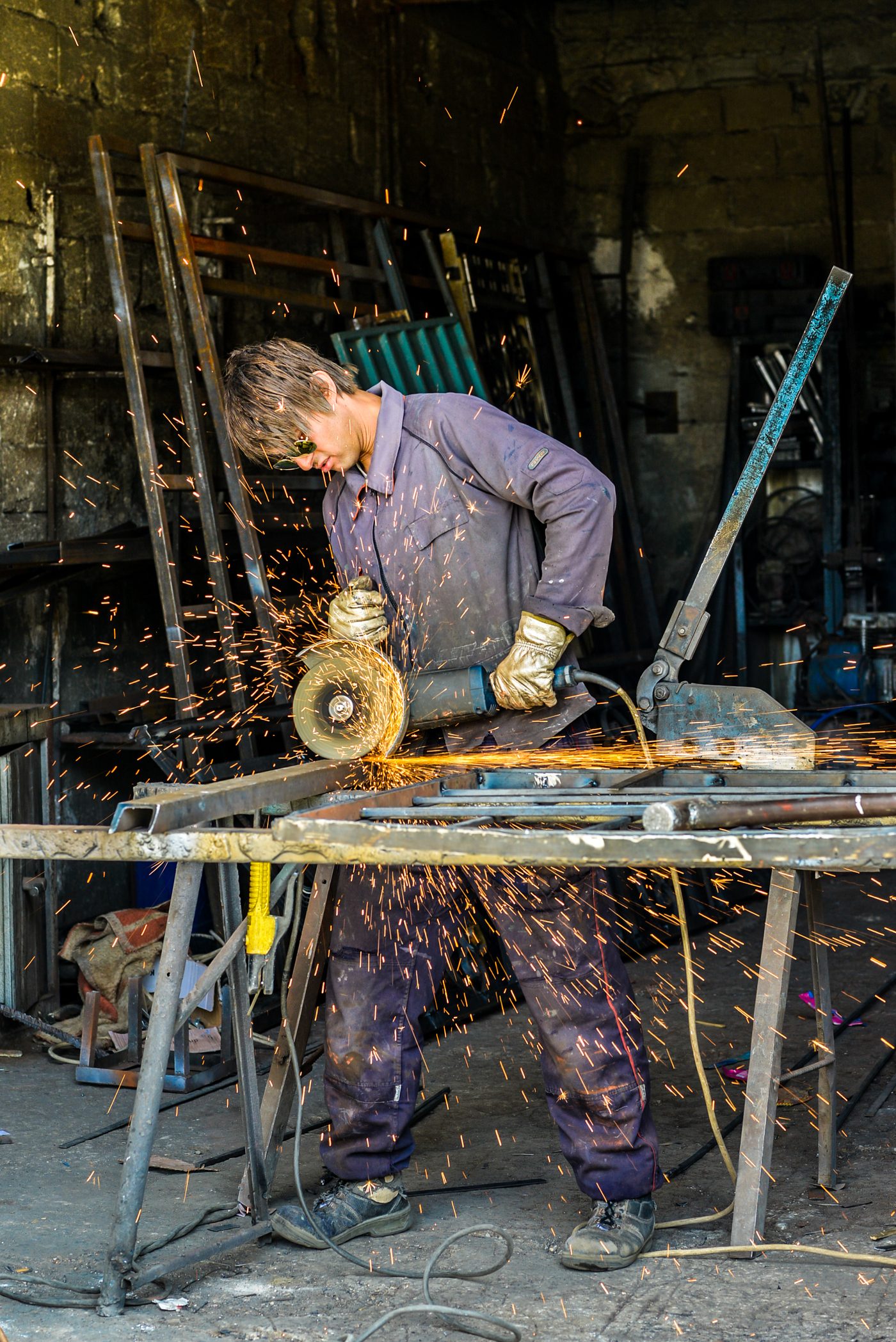
Worker using an angle grinder with sparks (Source: Wikimedia Commons)
- Nail Gun: Speeds up nailing processes, especially in repetitive tasks like framing, but requires training to avoid accidents.
1.1.3 Materials Handling Equipment
Handling and transporting construction materials efficiently is critical to maintaining workflow and reducing physical strain on workers. Farms and institutions in Kenya often invest in basic materials handling tools to optimize construction.
Typical Materials Handling Equipment
- Wheelbarrow: Used for moving soil, sand, cement, and stones within the construction site; robust tires and balanced design facilitate ease of movement.
- Shovels: Essential for digging foundations and mixing concrete manually, shovels must have strong shafts and comfortable grips.
- Crowbars: Help in dismantling old structures or adjusting heavy wooden beams during construction.
- Trolleys: Larger farms and agricultural colleges utilize trolleys to transport heavy or bulky materials safely.
- Ladders: Necessary for accessing higher parts of the structure, ladders should be sturdy and placed securely to prevent falls.
1.1.4 Maintenance and Safety of Construction Tools
Maintaining tools in good condition and adhering to safety standards minimizes downtime and accidents during construction. County government agricultural offices in Kisumu have implemented regular tool maintenance schedules, enhancing operational efficiency.
Maintenance Practices
- Cleaning: Tools should be cleaned after use to remove dirt, rust, and debris that can impair function.
- Lubrication: Moving parts of power tools require regular lubrication to prevent wear and tear.
- Sharpening: Cutting tools like saws and chisels must be sharpened frequently to maintain precision.
- Inspection: Regular checks for damage or wear help identify tools that need repair or replacement.
- Proper Storage: Tools stored in dry, secure locations avoid exposure to moisture and theft.
Safety Precautions
- Personal Protective Equipment (PPE): Workers should wear gloves, safety goggles, and helmets to prevent injuries.
- Training: Only trained personnel should operate power tools to reduce risks.
- Clear Work Area: Keeping the construction site tidy prevents trips and falls.
- Tool Usage: Using the right tool for each task avoids damage to tools and accidents.
- Emergency Procedures: Having first aid kits and emergency contacts readily available is essential.
Practice Questions
- Explain the importance of using a spirit level during the construction of beef cattle structures. (5 marks)
- List and describe five power tools commonly used in beef cattle structure construction and their specific uses. (10 marks)
- Discuss five maintenance practices for construction tools that help prolong their lifespan. (10 marks)
- Outline six safety precautions that should be observed when using power tools in cattle structure construction. (12 marks)
The rest of this chapter
🔒Create a free account to open more of this chapter.
Free: practical guides, quick cards, workplace scenarios and more.
Create a free account 🔒1.2 Beef Structures
In beef cattle management, the design and construction of specialized structures are critical for ensuring animal welfare, efficient handling, and optimal farm productivity. Kenyan beef farmers, whether operating small-scale ranches in Narok or large commercia…
🔒1.3 Designing of beef structures
Designing beef cattle structures requires careful consideration of the specific needs of the animals, the environmental conditions, and operational efficiency. In Kenya, where beef farming ranges from smallholder farms to large ranches, the design must accommo…
🔒1.4 Construction of beef structures
The construction phase transforms design plans into functional beef cattle structures, demanding careful execution to ensure safety, longevity, and compliance with animal welfare standards. In Kenya, construction often involves adapting to local materials and…
🔒1.5 Maintenance of beef structures
Maintaining beef cattle structures is essential in ensuring the longevity, safety, and functionality of facilities such as cattle sheds, feeding troughs, and fencing. In Kenya, where many farms and livestock enterprises operate on limited budgets, effective ma…
🔒1.6 Beef structure maintenance records
Keeping accurate maintenance records is vital for managing beef cattle facilities effectively. Records provide a history of repairs and inspections, enabling managers to make informed decisions about budgeting and scheduling. For example, a large university fa…
🔒1.7 Waste Management
Waste management is a critical aspect of constructing and maintaining beef cattle structures in Kenya. Effective handling of cattle waste not only promotes hygiene and animal health but also mitigates environmental pollution, which is a growing concern under r…
Chapter Summary
This chapter covered the essential tools and equipment required for constructing beef cattle structures, emphasizing their appropriate selection and use. It detailed various types of beef structures including crushes, milking parlors, barns, feeding facilities, cattle sheds, cattle dips, feed storage facilities, and farm offices, highlighting their specific functions and design considerations. The chapter then explored the principles of designing these structures to ensure durability, functionality, and animal welfare. Construction processes were explained step-by-step to guide effective building practices. Maintenance of beef structures was discussed to prolong their lifespan and maintain operational efficiency. The importance of keeping accurate maintenance records was also addressed to facilitate timely repairs and management decisions. Finally, the chapter emphasized proper waste management practices to promote hygiene and environmental sustainability on the farm.
Self-Assessment
🔒 PDFDownload this self-assessment, with answers
A. Written Assessment
- Identify five essential tools used in constructing beef cattle structures and briefly describe their specific uses. (10 marks)
- What are the main functions of a cattle crush, and why is it important in beef cattle management? (5 marks)
🔒18 more in this section.
Chapter Examination Questions
🔒 PDFDownload these examination questions, with model answers
SECTION A (40 Marks) - Answer ALL Questions
- Identify five essential tools used in the construction of beef cattle structures and explain their specific roles. (4 marks)
- Describe the main purpose of a cattle crush and how it contributes to animal welfare during handling. (4 marks)
🔒18 more in this section.