
By the end of this chapter, you will be able to:
These skills are essential because they help you provide accurate nutrition care that can improve health outcomes in your community.
Nutrition assessment is a fundamental phase within the nutrition care process, essential for identifying nutritional problems, planning interventions, and evaluating outcomes. For nutrition and dietetics professionals in Kenya, conducting thorough assessments ensures that interventions are tailored to the diverse needs of patients in hospitals, community health programs, and specialized clinics. This chapter explores the nutrition care process, emphasizing the role of personal protective equipment (PPE) during assessment, which safeguards both practitioners and clients in various healthcare and community settings.
Understanding the terminology used in the nutrition care process is critical for clear communication among nutrition professionals and other healthcare team members. This clarity is especially important in Kenya’s multidisciplinary health environments, such as county hospitals and community health centers.
The nutrition care process is a systematic approach to providing high-quality nutrition care. It involves assessment, diagnosis, intervention, monitoring, and evaluation, ensuring that nutrition professionals can deliver individualized and evidence-based care.
Nutrition assessment refers to the comprehensive evaluation of an individual’s nutritional status by collecting and interpreting relevant data. This includes dietary intake, anthropometric measurements, biochemical data, clinical signs, and psychosocial factors.
Personal protective equipment consists of clothing and devices worn to protect healthcare workers from exposure to infectious agents or hazardous materials during patient interactions. In Kenya’s healthcare settings, PPE includes gloves, masks, aprons, and eye protection.
This involves identifying and labeling specific nutrition problems that can be resolved or improved through nutrition intervention. Accurate diagnosis guides the focus of care and intervention planning.
Nutrition intervention includes the actions taken to address identified nutrition problems, such as dietary counseling, supplementation, or referral to other health services.
The nutrition care process plays a pivotal role in improving patient outcomes by structuring nutrition services systematically. In Kenya, where malnutrition coexists with rising non-communicable diseases, this process ensures that nutrition care is both effective and efficient.
By focusing on individual nutritional needs, the process promotes personalized interventions that consider cultural, socioeconomic, and health status factors prevalent in Kenyan communities.
The standardized framework allows nutritionists and dietitians to communicate effectively with other healthcare providers, enhancing integrated care in hospitals and clinics.
Systematic documentation within the process ensures continuity of care when patients move between departments or facilities, such as referrals from county hospitals to national referral centers.
The process encourages the use of current scientific evidence in assessment and intervention, improving the quality and outcomes of nutrition care.
By incorporating monitoring and evaluation, practitioners can assess the effectiveness of interventions and adjust plans accordingly, essential in managing chronic conditions like diabetes at clinics.
The nutrition care process is composed of sequential steps that guide nutrition professionals from assessment to evaluation. Each step is vital in ensuring comprehensive and effective care.
This initial step involves collecting detailed data on dietary intake, anthropometry, biochemical tests, clinical signs, and environmental factors affecting nutrition.
Using assessment data, the practitioner identifies specific nutrition problems, such as protein-energy malnutrition or micronutrient deficiencies, and formulates diagnostic statements.
Based on diagnosis, an individualized plan is developed that may include dietary modification, education, supplementation, or referral to other professionals.
Ongoing collection of data to track the patient’s progress toward nutrition goals, adjusting the care plan as necessary.
A formal review of outcomes to determine if the nutrition goals have been met, guiding future care decisions.
In nutrition care, PPE protects practitioners from potential exposure to infectious agents, especially during clinical and community assessments involving vulnerable populations. The following are the main types of PPE commonly used in Kenyan health settings.
| Name | Specification | Use |
|---|---|---|
| Gloves | Disposable, latex or nitrile | Protect hands from contamination |
| Face Masks | Surgical or N95 respirators | Prevent inhalation of airborne pathogens |
| Aprons | Waterproof, disposable or reusable | Protect clothing from contamination |
| Eye Protection | Goggles or face shields | Shield eyes from splashes |
| Hair Covers | Disposable caps | Prevent contamination of hair |
The use of PPE in nutrition care is critical to safeguard the health of the practitioner and the client, fostering a safe environment in diverse settings such as hospitals, schools, and community outreach programs.
During anthropometric measurements or dietary assessments involving bodily fluids, PPE prevents contamination of skin and clothing.
Use of PPE aligns with Kenyan Ministry of Health guidelines, ensuring that nutrition professionals adhere to national occupational safety standards.
Proper use of PPE demonstrates professionalism and concern for safety, encouraging clients to trust and engage openly during assessments.
PPE minimizes the transfer of microorganisms between patients and healthcare workers, protecting vulnerable populations like immunocompromised patients at Kenyatta National Hospital.
Proper management of PPE is essential to maintain its protective function and prevent environmental contamination, especially in resource-limited Kenyan health facilities.
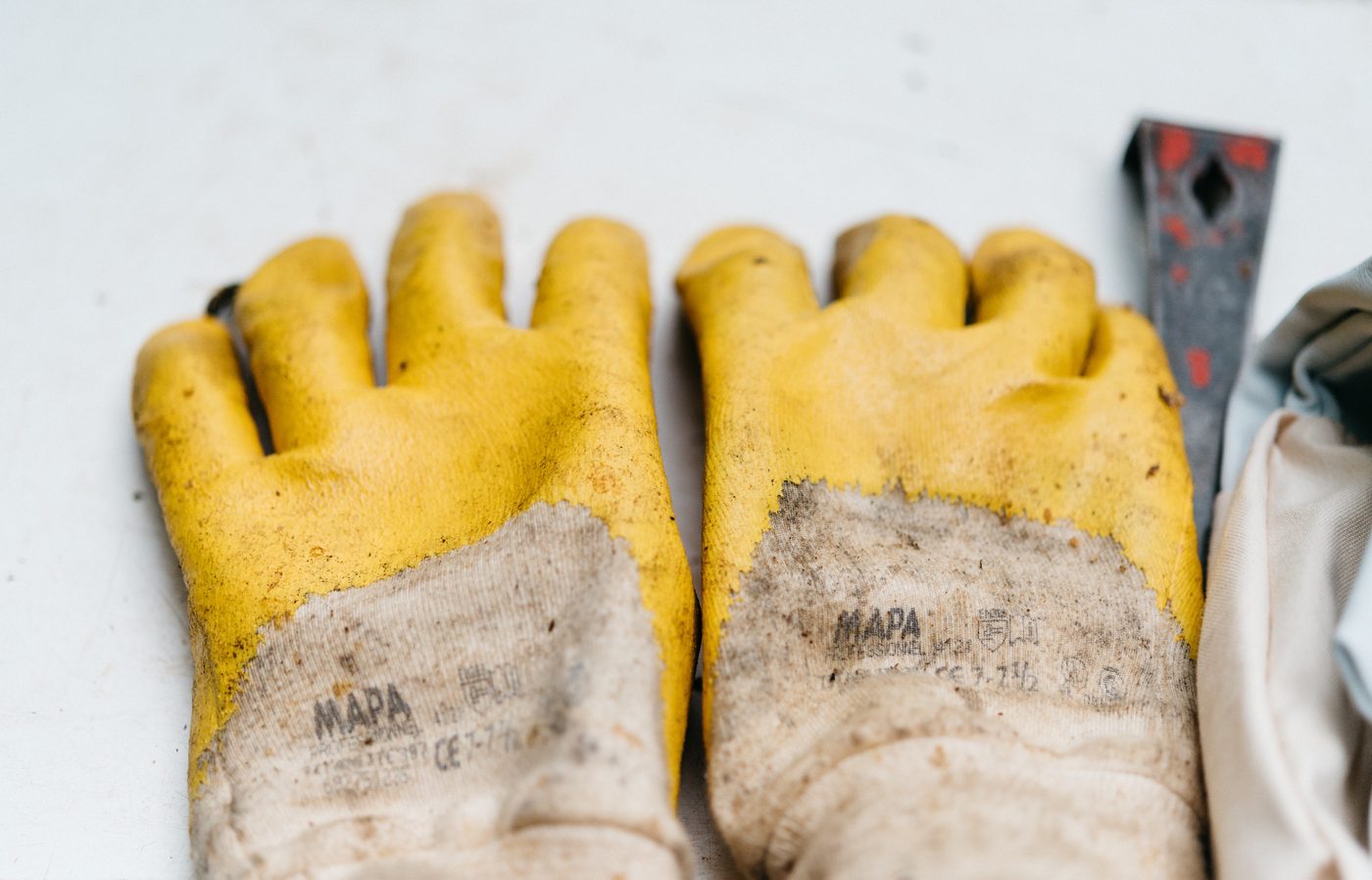
Pair of yellow work gloves used in carpentry (Source: Wikimedia Commons)
Define the nutrition care process and explain its significance in the Kenyan healthcare context. (10 marks)
Describe the five steps involved in the nutrition care process, highlighting the role of nutrition assessment. (15 marks)
List and explain five types of personal protective equipment used in nutrition care. (10 marks)
Discuss the importance of using PPE during nutrition assessment in Kenyan hospitals and community settings. (10 marks)
Outline the proper care, maintenance, and disposal procedures for PPE in a nutrition care environment. (10 marks)
Create a free account to open more of this chapter.
Free: practical guides, quick cards, workplace scenarios and more.
Create a free accountThis chapter introduced the nutrition care process by defining key terms such as nutrition, nutrition care, nutrition status, diagnosis, and interventions, and highlighted the significance and steps involved in delivering effective nutrition care. It emphasized the importance of personal protective equipment including gloves, face masks, lab coats, and biohazard waste bins, along with their maintenance and proper disposal to ensure safety during nutrition assessment. The chapter detailed anthropometric measurement methods and tools such as height, weight, BMI, MUAC, waist and hip circumferences, and head circumference, explaining their role in assessing nutritional status. Biochemical parameters were covered, focusing on various samples used to detect protein, vitamin, mineral deficiencies, glucose levels, and lipid profiles. Clinical and physical assessments were explored through medical history and physical examination of general appearance, skin, hair, nails, eyes, mouth, tongue, teeth, and gums. Dietary assessment methods including 24-hour recall, food frequency questionnaires, dietary records, diet history, weighed food records, duplicate diet methods, and observation were explained. The chapter also discussed socioeconomic assessment factors like income, education, employment, food access, cultural norms, household composition, housing conditions, and healthcare access. Finally, it addressed functionality assessments through body functionality analysis and the importance of thorough documentation using paper-based records, electronic health records, and nutrition software or mobile applications.
Type: Individual
| Tools & Equipment | Materials |
|---|---|
| Pen | Foolscap paper |
| Calculator | Reference notes on nutrition care process |
| S/N | Item | Quantity |
|---|---|---|
| 1 | Foolscap paper | 2 Sheets per Candidate |
| 2 | Pen | 1 Pc per Candidate |
| 3 | Calculator | 1 Pc per Candidate |
| 4 | Reference notes on nutrition care process | 1 Set per Candidate |
| Items to be Evaluated | Marks Available | Marks Obtained | Comments |
|---|---|---|---|
| TASK 1: Explain nutrition care process and define related terms | |||
| Wore appropriate attire (lab coat, closed shoes) (Award 1 mark each) | 2 | ||
| Arranged workspace with necessary materials and tools (Award 1 mark each) | 2 | ||
| Provided clear definition of Nutrition (Award 3 marks for accurate, concise explanation) | 3 | ||
| Defined Nutrition Care and Nutrition Status correctly (Award 2 marks each for clear definitions) | 4 | ||
| Explained Nutrition Care Process including its significance (Award 2 marks each for explanation of process steps and significance) | 6 | ||
| Defined Nutrition Diagnosis and Nutrition Interventions with examples (Award 3 marks each for clear definitions and relevant examples) | 6 | ||
| Listed and described the sequential steps involved in the Nutrition Care Process (Award 1 mark per correct step described, total 7 marks) | 7 | ||
| Sub-Total | 30 | ||
| PRODUCT CHECKLIST | |||
| Written explanation is clear, well-organized, and covers all required terms (Award up to 10 marks for clarity, completeness, and coherence) | 10 | ||
| Sub-Total | 10 | ||
| GRAND TOTAL | 40 | ||
Type: Individual
| Tools & Equipment | Materials |
|---|---|
| Disposable gloves | Cotton wool balls |
| Surgical face masks | Waste disposal bags |
| Clean Lab coat | |
| Biohazard waste bin with liner | |
| Hand sanitizer |
| S/N | Item | Quantity |
|---|---|---|
| 1 | Disposable gloves | 2 pairs per Candidate |
| 2 | Surgical face masks | 1 Pc per Candidate |
| 3 | Clean Lab coat | 1 Pc per Candidate |
| 4 | Biohazard waste bin with liner | 1 Pc per 5 Candidates |
| 5 | Hand sanitizer (70% alcohol) | 1 bottle per Candidate |
| 6 | Cotton wool balls | 10 Pcs per Candidate |
| 7 | Waste disposal bags | 1 Pc per Candidate |
| Items to be Evaluated | Marks Available | Marks Obtained | Comments |
|---|---|---|---|
| TASK 1: Demonstrate correct use of PPEs | |||
| Selected appropriate PPEs for nutrition assessment (lab coat, gloves, face mask) (Award 1 mark each if correct) | 3 | ||
| Correctly donned lab coat and ensured it is clean and buttoned (Award 2 marks if done properly) | 2 | ||
| Properly wore disposable gloves without contamination (Award 2 marks if gloves worn correctly) | 2 | ||
| Wore surgical face mask covering nose and mouth securely (Award 2 marks if mask worn correctly) | 2 | ||
| Maintained PPE during the nutrition assessment without contamination (Award 3 marks for proper maintenance during assessment) | 3 | ||
| Disposed of used gloves and other disposable PPE into biohazard waste bin correctly (Award 3 marks if disposed correctly) | 3 | ||
| Cleaned hands with sanitizer after PPE removal (Award 2 marks if hand hygiene performed properly) | 2 | ||
| Handled and maintained reusable PPE (lab coat) appropriately after use (Award 1 mark if lab coat handled properly for cleaning) | 1 | ||
| Ensured biohazard waste bin liner was properly tied and secured after disposal (Award 1 mark if waste bin liner secured properly) | 1 | ||
| Sub-Total | 19 | ||
| PRODUCT CHECKLIST | |||
| PPE worn fits properly and is visibly clean and intact throughout assessment (Award 5 marks if PPE fit and condition are correct) | 5 | ||
| Used PPE disposed correctly in designated biohazard containers (Award 4 marks if disposal is correct and according to protocol) | 4 | ||
| Hand hygiene performed correctly after PPE removal (Award 2 marks if hand hygiene technique and timing are correct) | 2 | ||
| Sub-Total | 11 | ||
| GRAND TOTAL | 30 | ||
At the start of this chapter we promised you would be able to:
Tick each one you can genuinely do.
So, are you there yet?
You're competent when you can confidently do 50% or more of what this chapter promised.
Sign in to record how you're doing.