Performing hair removal procedures exposes tools and equipment to skin oils, hair debris, wax residue, and potentially pathogenic microorganisms. Proper cleaning of these implements is crucial to prevent cross-contamination, maintain hygiene standards, and ensure client safety. In the Kenyan cosmetology sector, adherence to stringent cleaning protocols also upholds professional reputation and complies with health regulations enforced by bodies such as the Ministry of Health and the Kenya Bureau of Standards. This chapter focuses on the cleaning of tools and equipment following hair removal services, emphasizing practical and effective methods suited for cosmetology professionals.
3.1 Cleaning Tools and Equipment
Cleaning tools and equipment after hair removal treatments is a fundamental post-service procedure that preserves the integrity of implements and protects clients from infections. Kenyan cosmetologists working in salons, spas, and clinics must understand not only how to clean but also why each step is essential. Proper cleaning also extends the lifespan of costly tools, reducing operational costs in the long run.
3.1.1 Identification and Classification of Tools and Equipment Used in Hair Removal
Understanding the types of tools and equipment involved in hair removal allows for tailored cleaning methods that address the specific materials and contamination risks each presents. In Kenyan salons, tools range from reusable metallic tweezers to wax heaters and spatulas, each requiring different care.
Tools Commonly Used in Hair Removal
- Tweezers: Precision instruments made of stainless steel used to pluck individual hairs. They must be cleaned thoroughly to remove skin oils and hair fragments.
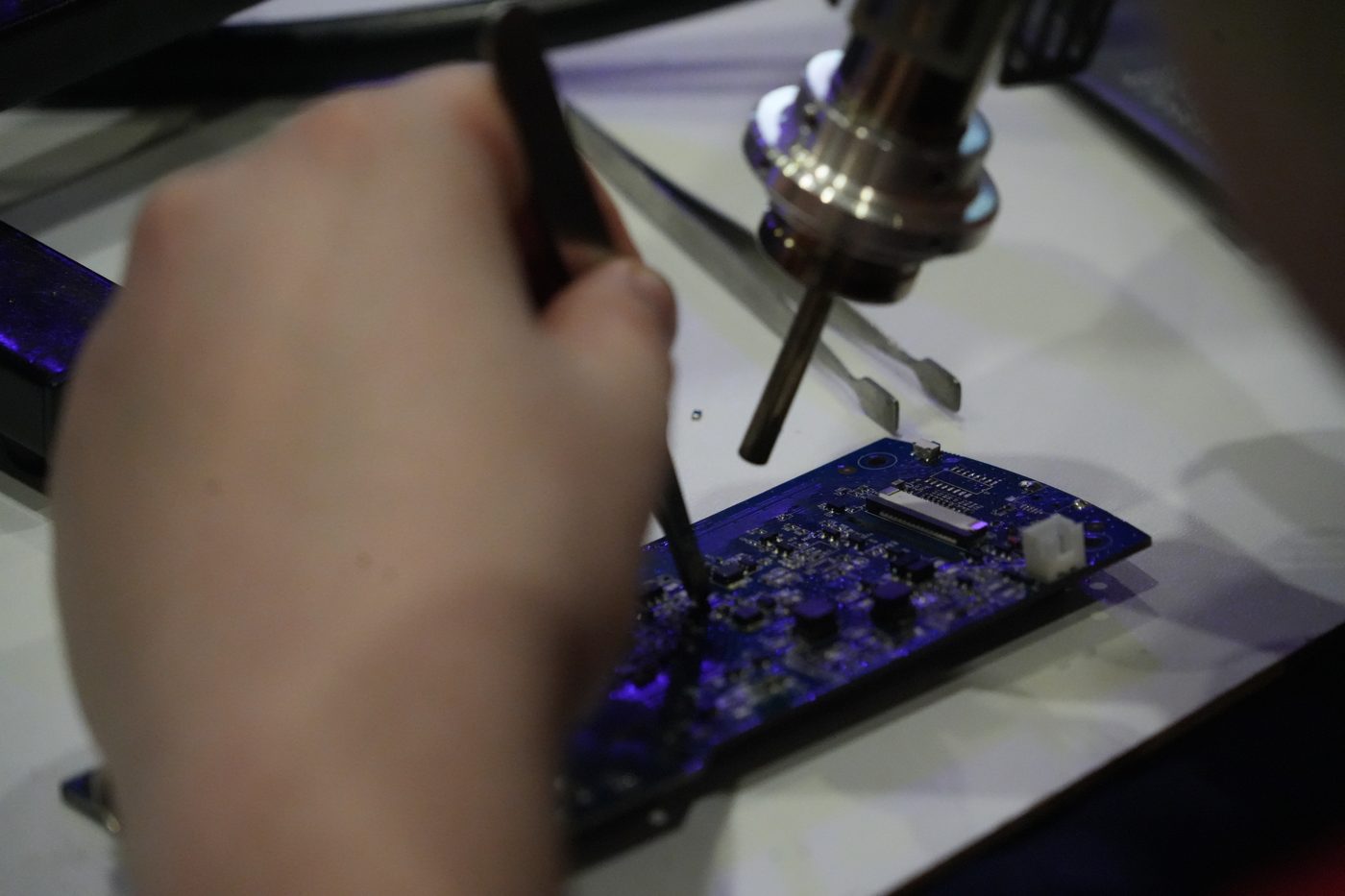
Hand holding tweezers near electronic circuit board (Source: Wikimedia Commons)
- Waxing Spatulas: Usually wooden or plastic sticks used to apply hot wax. These are often disposable but reusable types must be sanitized carefully.
- Wax Heaters: Electrical devices used to melt wax to an appropriate temperature. The surfaces exposed to wax require cleaning without damaging electrical components.
- Roller Wax Applicators: Tools that evenly spread wax on the skin. They must be cleaned to prevent wax buildup and bacterial contamination.
- Post-Waxing Cloths or Towels: Used to remove residual wax or soothe skin; these must be laundered properly after each use.
Classification Based on Material and Reusability
- Reusable Metal Tools: Tweezers and stainless steel implements require sterilization after cleaning.
- Disposable Tools: Wooden spatulas and paper strips are single-use to prevent contamination.
- Electrical Equipment: Wax heaters and UV lamps need surface cleaning and regular maintenance without immersing in water.
- Textile Items: Towels and cloths used during services require laundering with appropriate disinfectants.
3.1.2 Cleaning Methods and Appropriate Cleaning Agents for Hair Removal Equipment
Cleaning methods must be compatible with the material of the tools and the type of contaminants present. Kenyan cosmetology professionals benefit from knowing which cleaning agents are effective yet safe for their equipment.
Cleaning Techniques for Different Tools
- Manual Cleaning: Physical removal of visible debris using brushes and cloths is the first step, particularly for wax residue and hair strands.
- Soaking: Tools such as metal tweezers can be soaked in soapy water or enzymatic cleaners to loosen contaminants.
- Use of Disinfectants: After cleaning, tools should be immersed in approved disinfectants like 70% isopropyl alcohol or chlorhexidine solutions to eliminate microbes.
- Ultrasonic Cleaning: Some salons invest in ultrasonic cleaners that use high-frequency sound waves to remove microscopic debris from metal instruments.
- Surface Wiping: Electrical devices require wiping with disinfectant-soaked cloths, avoiding moisture ingress into electrical parts.
Recommended Cleaning Agents
- Neutral pH Soaps: Effective for removing oils and wax without damaging tool surfaces.
- Enzymatic Cleaners: Break down proteinaceous material like skin cells and hair fragments.
- Alcohol-Based Disinfectants: Provide rapid antimicrobial action on metal tools.
- Chlorine-Based Solutions: Used cautiously due to corrosive potential on metal.
- Detergents: Used for general cleaning of surfaces and non-metallic implements.
3.1.3 Procedures for Cleaning, Disinfecting, and Sterilizing Hair Removal Tools
A systematic approach ensures that all contaminants, including pathogens, are removed or destroyed, safeguarding client health and complying with Kenyan health standards.
Cleaning Procedure
- Pre-Cleaning: Remove all visible debris from tools immediately after use by wiping or scraping off wax and hair.
- Washing: Immerse tools in warm water with neutral detergent, scrubbing with a soft brush to dislodge contaminants.
- Rinsing: Thoroughly rinse under running water to remove all soap residues.
- Drying: Use a clean, lint-free towel or air dry to prevent rust formation on metal tools.
Disinfection Procedure
- Immersion: Submerge cleaned tools in an appropriate disinfectant solution for the manufacturer's recommended time, typically 10-15 minutes.
- Drying: Remove tools using sterile gloves or tongs, rinse if required by disinfectant instructions, then dry completely.
- Storage: Place disinfected tools in sterile containers or sealed pouches until use.
Sterilization Procedure (for Reusable Metal Tools)
- Autoclaving: Use steam sterilization at 121°C for 15-20 minutes under pressure, ensuring tools are properly wrapped to maintain sterility.
- Sterile Storage: Store sterilized tools in sterile pouches until needed for service.
3.1.4 Maintenance and Storage of Hair Removal Tools and Equipment Post-Cleaning
Proper maintenance and storage after cleaning preserve tool functionality and hygiene, which is critical for sustained professional service delivery in Kenyan cosmetology establishments.
Maintenance Practices
- Regular Inspection: Check tools for damage such as rust, blunt edges, or cracks that could cause injury or contamination.
- Lubrication: Apply appropriate oils to metal hinges on tweezers to prevent corrosion and maintain smooth operation.
- Calibration: For electrical devices like wax heaters, verify temperature controls function correctly to ensure safe use.
Storage Guidelines
- Sterile Containers: Store cleaned and disinfected tools in sealed containers to prevent dust and microbial contamination.
- Separate Storage: Keep disposable tools segregated from reusable ones to avoid cross-contamination.
- Dry Environment: Store equipment in a dry, cool place to inhibit microbial growth and prevent material degradation.
- Labeling: Clearly mark storage containers with cleaning dates to maintain cleaning schedules and audit compliance.
Proper tool care improves client safety and extends equipment lifespan, which is vital for the economic viability of Kenyan salons and spas.
Practice Questions
- Explain why it is important to classify hair removal tools based on material and reusability in a cosmetology setting. (5 marks)
- Describe the steps involved in cleaning and disinfecting metal tweezers after a hair removal service. (6 marks)
- Identify five cleaning agents suitable for hair removal equipment and explain why each is appropriate. (10 marks)
- Discuss maintenance practices that ensure the longevity of hair removal tools in a Kenyan salon. (5 marks)
The rest of this chapter
🔒Create a free account to open more of this chapter.
Free: practical guides, quick cards, workplace scenarios and more.
Create a free account 🔒3.2 Clean Work Station
In the context of cosmetology in Kenya, maintaining a clean work station after performing hair removal services is essential for client safety, professional reputation, and regulatory compliance. A clean work environment helps prevent infections, cross-contami…
🔒3.3 Recyclable Supplies
In the cosmetology industry, especially within hair removal services, managing supplies sustainably is increasingly important. Kenyan salons and spas are adopting eco-friendly practices to reduce waste and operational costs while appealing to environmentally c…
Chapter Summary
This chapter focused on the essential steps involved in performing the hair removal post service procedure, beginning with the thorough cleaning of tools and equipment. Proper sanitation of instruments is critical to prevent cross-contamination and maintain client safety. Attention was then given to maintaining a clean work station, emphasizing the importance of an organized and hygienic environment to promote professionalism and efficiency. The chapter also highlighted the management of recyclable supplies, outlining how to sort and dispose of materials responsibly to support environmental sustainability. These practices collectively ensure a safe and pleasant experience for clients while upholding industry standards. Maintaining these post-service routines contributes to the longevity of equipment and the overall quality of the hair removal service.
Self-Assessment
🔒 PDFDownload this self-assessment, with answers
A. Written Assessment
- What is the primary purpose of cleaning tools and equipment after a hair removal service? (2 marks)
- Identify three types of tools commonly used in hair removal services that require cleaning. (3 marks)
🔒20 more in this section.
Chapter Practical Activities
Practical 1: Cleaning and Disinfecting Hair Removal Tools 250mm Length
Cosmetology · Level 6
Hair Removal Service
PRACTICAL ASSESSMENT
TIME: 3 HOURS
⬇ PDFCandidate Instructions (Candidate Tool)
Type: Individual
INSTRUCTIONS TO CANDIDATE:
1. You are required to perform the following task:
i. Clean and disinfect a set of hair removal tools including tweezers, scissors (250mm length), and spatula following workplace hygiene standards.
2. You have been provided with the following resources for the practical task:
| Tools & Equipment | Materials |
|---|
| Tweezers | Disinfectant |
| Scissors | Cotton wool |
| Spatula | Cleanser |
| Small basin | Towel |
| Dust bin | Disposable gloves |
| Apron |
⬇ PDFResources Required (Cutting List)
| S/N | Item | Quantity |
|---|
| 1 | Disinfectant | 100ml per Candidate |
| 2 | Cotton wool | 50 Pcs per Candidate |
| 3 | Small basin | 1 Pc per 5 Candidates |
| 4 | Cleanser | 50ml per Candidate |
| 5 | Towel | 1 Pc per Candidate |
| 6 | Tweezers | 1 Pc per Candidate |
| 7 | Scissors | 1 Pc per 5 Candidates |
| 8 | Spatula | 1 Pc per Candidate |
| 9 | Waxing strips | 1 Roll per 5 Candidates |
| 10 | Disposable gloves | 2 Pairs per Candidate |
| 11 | Dust bin | 1 Pc per 5 Candidates |
| 12 | Apron | 1 Pc per Candidate |
⬇ PDFAssessor Guide
| Items to be Evaluated | Marks Available | Marks Obtained | Comments |
|---|
| TASK 1: Cleaning and Disinfecting Hair Removal Tools |
Wore personal protective equipment including apron and disposable gloves
(Award 1 mark each for apron and gloves) | 2 | | |
Assembled all required cleaning materials and tools before starting
(Award 2 marks or zero) | 2 | | |
Removed visible debris and residues from tools using cleanser and cotton wool
(Award 1 mark each for cleanser use, thorough cleaning, and no damage) | 3 | | |
Rinsed tools in clean water using small basin
(Award 2 marks or zero) | 2 | | |
Applied disinfectant properly by soaking or wiping tools as per manufacturer instructions
(Award 3 marks or zero) | 3 | | |
Allowed tools to air dry on clean towel without contamination
(Award 2 marks or zero) | 2 | | |
Disposed of used cotton wool and cleaning waste correctly in dust bin
(Award 2 marks or zero) | 2 | | |
Stored disinfected tools in designated clean storage area
(Award 2 marks or zero) | 2 | | |
| Sub-Total | 18 | | |
| PRODUCT CHECKLIST |
All hair removal tools are visibly clean and free from debris
(Award 2 marks or zero) | 2 | | |
Tools show no signs of rust, corrosion or damage after cleaning
(Award 2 marks or zero) | 2 | | |
Tools are disinfected as per manufacturer and workplace standards
(Award 3 marks or zero) | 3 | | |
Tools are dried and stored hygienically to prevent contamination
(Award 3 marks or zero) | 3 | | |
| Sub-Total | 10 | | |
| GRAND TOTAL | 28 | | |
ASSESSMENT OUTCOME: ☐ Competent ☐ Not Yet Competent (competent if at least 50%)
Practical 2: Sterilize reusable hair removal equipment 300mm x 200mm workstation area
Cosmetology · Level 6
Hair Removal Service
PRACTICAL ASSESSMENT
TIME: 4 HOURS
⬇ PDFCandidate Instructions (Candidate Tool)
Type: Individual
INSTRUCTIONS TO CANDIDATE:
1. You are required to perform the following task:
i. Sterilize reusable hair removal equipment including 2 metal spatulas and 1 tweezer using the autoclave and disinfectant following standard procedures within a 300mm x 200mm workstation area.
2. You have been provided with the following resources for the practical task:
| Tools & Equipment | Materials |
|---|
| Sterilizing autoclave | Sterilizing solution (Disinfectant) |
| Metal spatulas | Clean towels |
| Tweezers | Disposable gloves |
| Sterilizing trays | Clean water supply |
| Brush for cleaning tools | |
| Waste bin with lid | |
⬇ PDFResources Required (Cutting List)
| S/N | Item | Quantity |
|---|
| 1 | Sterilizing autoclave | 1 Pc per 5 Candidates |
| 2 | Metal spatulas | 2 Pcs per Candidate |
| 3 | Tweezers | 1 Pc per Candidate |
| 4 | Sterilizing solution (Disinfectant) | 100 ml per Candidate |
| 5 | Clean towels | 3 Pcs per Candidate |
| 6 | Disposable gloves | 1 Pair per Candidate |
| 7 | Sterilizing trays | 1 Pc per Candidate |
| 8 | Brush for cleaning tools | 1 Pc per Candidate |
| 9 | Waste bin with lid | 1 Pc per 5 Candidates |
| 10 | Clean water supply | Sufficient for rinsing |
⬇ PDFAssessor Guide
| Items to be Evaluated | Marks Available | Marks Obtained | Comments |
|---|
| TASK 1: Sterilizing reusable hair removal equipment |
Wore disposable gloves before handling equipment
(Award 2 marks or zero) | 2 | | |
Cleaned equipment using brush and water to remove visible debris
(Award 3 marks or zero) | 3 | | |
Submerged equipment in sterilizing solution for recommended time
(Award 3 marks or zero) | 3 | | |
Rinsed equipment with clean water after disinfecting
(Award 2 marks or zero) | 2 | | |
Placed equipment properly in sterilizing trays
(Award 2 marks or zero) | 2 | | |
Operated autoclave following manufacturer’s instructions
(Award 4 marks or zero) | 4 | | |
Allowed equipment to dry completely before storage
(Award 2 marks or zero) | 2 | | |
Disposed of waste safely in covered waste bin
(Award 2 marks or zero) | 2 | | |
| Sub-Total | 20 | | |
| PRODUCT CHECKLIST |
Equipment sterilized and free from contamination as per standard hygiene requirements
(Award 10 marks or zero) | 10 | | |
Equipment arranged neatly and stored appropriately after sterilization
(Award 5 marks or zero) | 5 | | |
| Sub-Total | 15 | | |
| GRAND TOTAL | 35 | | |
ASSESSMENT OUTCOME: ☐ Competent ☐ Not Yet Competent (competent if at least 50%)
🔒Cleaning and Organizing the Hair Removal Work Station After ServicePractical 3
🔒Disposal of Non-Recyclable Waste Materials after Hair Removal ServicePractical 4
🔒Sorting and Storing Recyclable Supplies after Hair Removal ServicePractical 5
🔒Inventory Check and Restocking of Recyclable Hair Removal SuppliesPractical 6
🔒Inspection and Maintenance of Hair Removal ToolsPractical 7
🔒Organize tools and recyclable supplies post hair removal servicePractical 8
🔒Preparation of Cleaning and Disinfecting Solutions for Hair Removal Tools and Work StationPractical 9
🔒Documenting post-service cleaning and supply management for hair removalPractical 10