
By the end of this chapter, you will be able to:
Mastering these skills helps ensure the rainwater system works reliably and keeps everyone safe on the job.
Rainwater harvesting systems are increasingly utilized across Kenya to supplement water supply for diverse professional settings such as schools, hospitals, farms, and county government offices. Testing the rainwater system is essential to ensure the collected water meets safety and quality standards suitable for its intended use. This chapter focuses on the critical aspects of testing rainwater systems, including the necessary personal protective equipment for safe handling and the various water tests to verify water quality.
In Kenya’s professional environments where rainwater harvesting systems are installed and tested, the use of appropriate personal protective equipment (PPE) is vital. PPE safeguards workers from potential hazards such as chemical exposure during water treatment, biological contaminants, and physical injuries from handling equipment. Different sectors such as county hospitals, educational institutions, and retail businesses must comply with PPE protocols to protect staff involved in water system maintenance and testing.
The selection of PPE depends on the specific tasks involved in testing rainwater systems, including sampling, chemical treatment, and equipment handling.

Pair of yellow work gloves used in carpentry (Source: Wikimedia Commons)
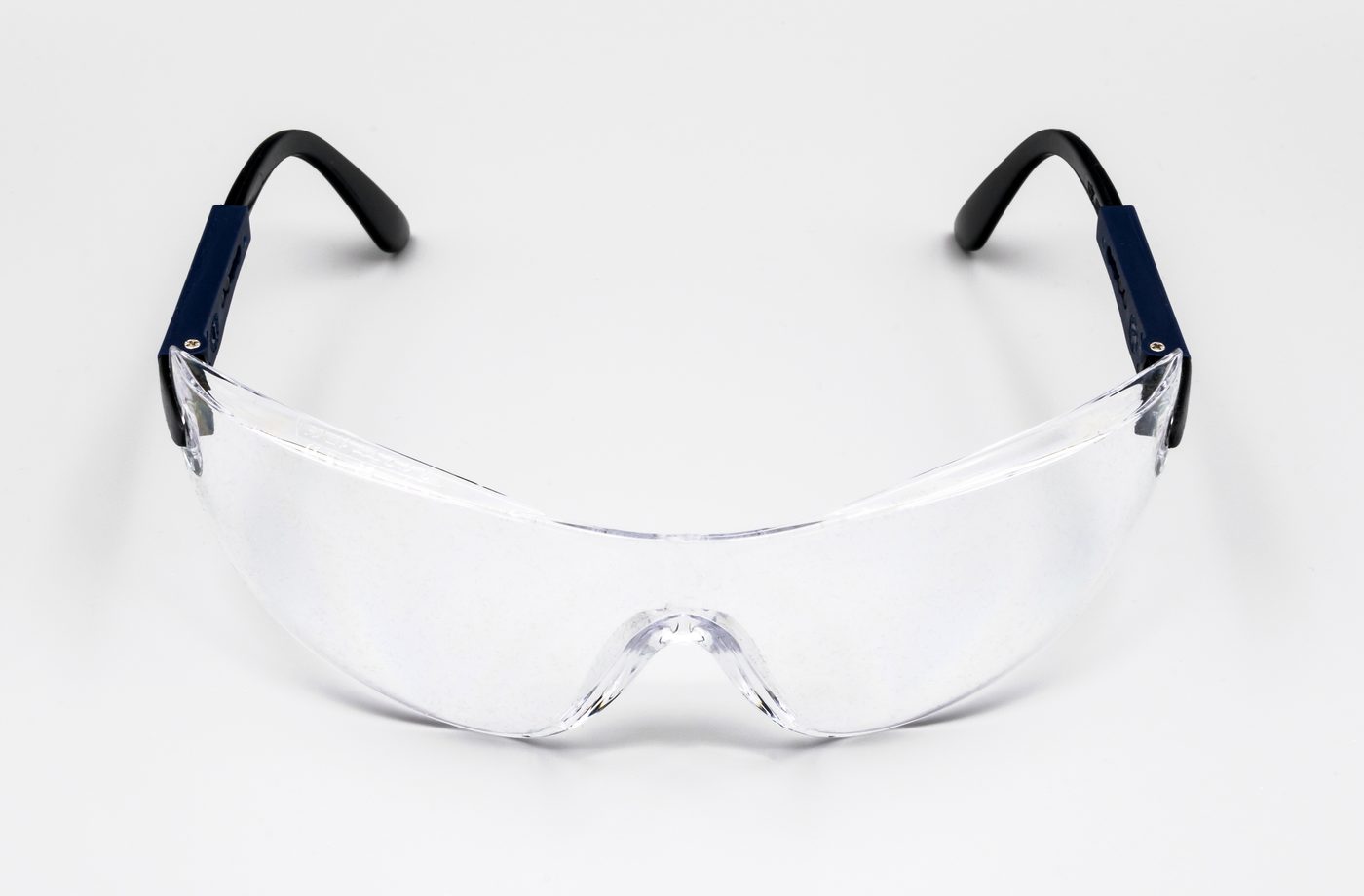
Clear safety goggles for eye protection (Source: Wikimedia Commons)
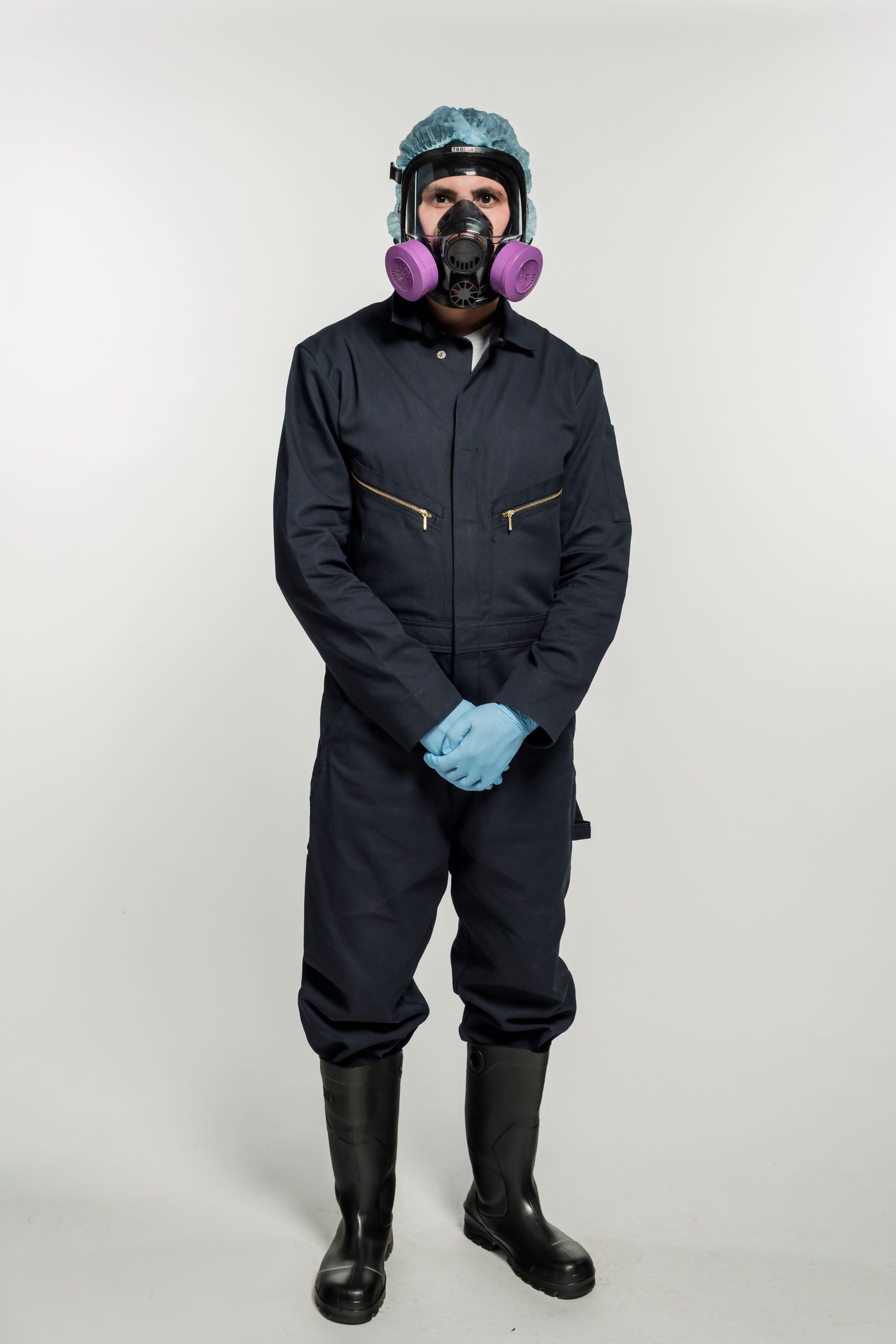
Person wearing a construction face mask with filters (Source: Wikimedia Commons)
Using PPE is not only a regulatory requirement but a practical safety measure that minimizes health risks associated with rainwater testing.
Choosing appropriate PPE requires understanding the hazards present and the nature of the testing activities.
Proper care and correct use of PPE are essential to maintain its protective function and extend its lifespan.
Create a free account to open more of this chapter.
Free: practical guides, quick cards, workplace scenarios and more.
Create a free accountThis chapter focused on the essential aspects of testing a rainwater harvesting system, starting with the importance of using personal protective equipment to ensure safety during inspection and maintenance activities. It then covered various water tests that assess the quality and suitability of harvested rainwater for different uses. Common faults in rainwater systems were examined, including water podding, which occurs when water accumulates in unwanted areas, water leakage that compromises system efficiency, and blockages that hinder water flow. The chapter concluded with housekeeping practices necessary for maintaining the system’s functionality and prolonging its lifespan. Overall, understanding these elements is critical for effective operation and management of rainwater harvesting installations.
Type: Individual
| Tools & Equipment | Materials |
|---|---|
| Turbidity meter | 5-litre rainwater sample in sterilized container |
| Chlorine test kit | pH test strips |
| Thermometer | Protective gloves |
| Sterile test tubes | Lab coat |
| Sterile droppers | Safety goggles |
| Portable microscope |
| S/N | Item | Quantity |
|---|---|---|
| 1 | 5-litre rainwater sample in sterilized container | 1 per Candidate |
| 2 | pH test strips (range 4.0-10.0) | 10 strips per Candidate |
| 3 | Turbidity meter | 1 per 2 Candidates |
| 4 | Chlorine test kit (DPD method) | 1 per Candidate |
| 5 | Thermometer (range 0-50°C) | 1 per Candidate |
| 6 | Sterile test tubes (15 ml) | 5 per Candidate |
| 7 | Sterile droppers | 2 per Candidate |
| 8 | Portable microscope | 1 per 3 Candidates |
| 9 | Protective gloves | 1 pair per Candidate |
| 10 | Lab coat | 1 per Candidate |
| 11 | Safety goggles | 1 per Candidate |
| Items to be Evaluated | Marks Available | Marks Obtained | Comments |
|---|---|---|---|
| TASK 1: Preparation and PPE Use | |||
| Wearing full PPE (lab coat, gloves, safety goggles) (Award 2 marks for wearing all PPE items or zero) | 2 | ||
| Sub-Total | 2 | ||
| TASK 2: Sample Handling and Setup | |||
| Properly labeled and handled rainwater sample with sterile techniques (Award 2 marks for correct sterile handling or zero) | 2 | ||
| Calibrated and prepared testing instruments correctly (Award 2 marks for correct calibration/preparation or zero) | 2 | ||
| Sub-Total | 4 | ||
| TASK 3: Conducting Water Quality Tests | |||
| Measured pH using test strips accurately (Award 3 marks for correct pH measurement and recording or zero) | 3 | ||
| Measured turbidity using turbidity meter correctly (Award 3 marks for correct turbidity measurement and recording or zero) | 3 | ||
| Tested residual chlorine concentration using DPD method accurately (Award 3 marks for correct chlorine test procedure and recording or zero) | 3 | ||
| Measured water temperature using thermometer correctly (Award 2 marks for correct temperature measurement or zero) | 2 | ||
| Prepared and examined microbial contamination using portable microscope (Award 3 marks for correct microbial sample preparation and observation or zero) | 3 | ||
| Sub-Total | 14 | ||
| TASK 4: Data Recording and Cleanup | |||
| Recorded all test results clearly and accurately (Award 3 marks for complete and accurate recording or zero) | 3 | ||
| Cleaned and stored tools and equipment as per manufacturer’s guidelines (Award 3 marks for proper cleaning and storage or zero) | 3 | ||
| Disposed of waste materials according to environmental protection guidelines (Award 2 marks for correct waste disposal or zero) | 2 | ||
| Sub-Total | 8 | ||
| PRODUCT CHECKLIST | |||
| Complete water quality test report including pH (6.5-8.5), turbidity (<5 NTU), chlorine residual (0.2-0.5 mg/L), temperature (15-25°C), and microbial contamination results (Award 12 marks for complete and accurate test report matching standard limits or zero) | 12 | ||
| Sub-Total | 12 | ||
| GRAND TOTAL | 40 | ||
Type: Individual
| Tools & Equipment | Materials |
|---|---|
| Tape measure | Safety helmet |
| Spirit level | Protective gloves |
| Screwdriver set | Dustcoat/overall |
| Pliers | Inspection checklist form |
| Torch/flashlight | Pen or pencil |
| S/N | Item | Quantity |
|---|---|---|
| 1 | Safety helmet | 1 Pc per Candidate |
| 2 | Protective gloves | 1 Pair per Candidate |
| 3 | Dustcoat/overall | 1 Pc per Candidate |
| 4 | Tape measure 5m | 1 Pc per Candidate |
| 5 | Spirit level 600mm | 1 Pc per Candidate |
| 6 | Screwdriver set | 1 Set per Candidate |
| 7 | Pliers | 1 Pc per Candidate |
| 8 | Inspection checklist form | 1 Pc per Candidate |
| 9 | Pen or pencil | 1 Pc per Candidate |
| 10 | Torch/flashlight | 1 Pc per Candidate |
| Items to be Evaluated | Marks Available | Marks Obtained | Comments |
|---|---|---|---|
| TASK 1: Safety and Preparation | |||
| Wore all required PPE (helmet, gloves, dustcoat) (Award 1 mark for each PPE worn or zero) | 3 | ||
| Used tools and equipment correctly during inspection (Award 1 mark for each correctly used tool: tape measure, spirit level, screwdriver, pliers, torch) | 3 | ||
| Interpreted the rainwater system layout correctly (Award 2 marks for correct interpretation or zero) | 2 | ||
| Sub-Total | 8 | ||
| TASK 2: Fault Identification and Documentation | |||
| Measured and checked gutter alignment and slope (Award 3 marks for correct measurement and slope assessment) | 3 | ||
| Inspected downspout for blockages, leaks, and secure mounting (Award 3 marks for correct identification of faults or zero) | 3 | ||
| Checked storage tank inlet/outlet connections for leaks or damage (Award 3 marks for accurate fault detection or zero) | 3 | ||
| Recorded all identified faults clearly on the inspection checklist (Award 3 marks for complete and clear documentation or zero) | 3 | ||
| Sub-Total | 12 | ||
| PRODUCT CHECKLIST | |||
| Complete and accurate fault identification report matching actual system faults (Award 10 marks for 100% accuracy, 5 marks for 50% accuracy, zero otherwise) | 10 | ||
| Sub-Total | 10 | ||
| GRAND TOTAL | 30 | ||
At the start of this chapter we promised you would be able to:
Tick each one you can genuinely do.
So, are you there yet?
You're competent when you can confidently do 50% or more of what this chapter promised.
Sign in to record how you're doing.