
By the end of this chapter, you will be able to:
Mastering these skills will help you create strong, safe cable joints that last, making you a valuable professional in the electrical trade.
Electrical cable jointing is a fundamental skill in the installation and maintenance of PVC sheathed cable systems. Accurate and safe joining ensures continuity of electrical circuits, preventing power interruptions and hazards. Professionals from diverse Kenyan sectors such as county referral hospitals, universities, banks, and agricultural cooperatives require proficiency with the right tools to achieve durable and compliant joints. This chapter introduces the essential electrical and measuring tools critical to successful cable jointing.
The selection and proper use of electrical tools and equipment form the backbone of effective cable jointing. In Kenya’s dynamic workplaces ranging from county government offices to retail enterprises, these tools ensure precision, safety, and compliance with standards. Understanding the purpose and correct handling of each tool reduces risks such as electric shock and mechanical damage to cables.
Electrical cable jointing requires a specific set of tools designed to prepare, connect, and insulate cables efficiently:
Wire Strippers: These tools remove the PVC insulation from cables without damaging the copper conductor beneath. For example, at a Nairobi university’s maintenance workshop, wire strippers enable technicians to prepare cables swiftly for jointing laboratory equipment.
Side Cutting Pliers: Used to cut cables to length and trim conductors cleanly. In a county referral hospital, side cutters assist electricians in adjusting cable lengths for medical equipment installations.
Screwdrivers (Insulated): Essential for tightening terminal screws during joint assembly. Banks rely on insulated screwdrivers to safely handle electrical panels without risk of shock.
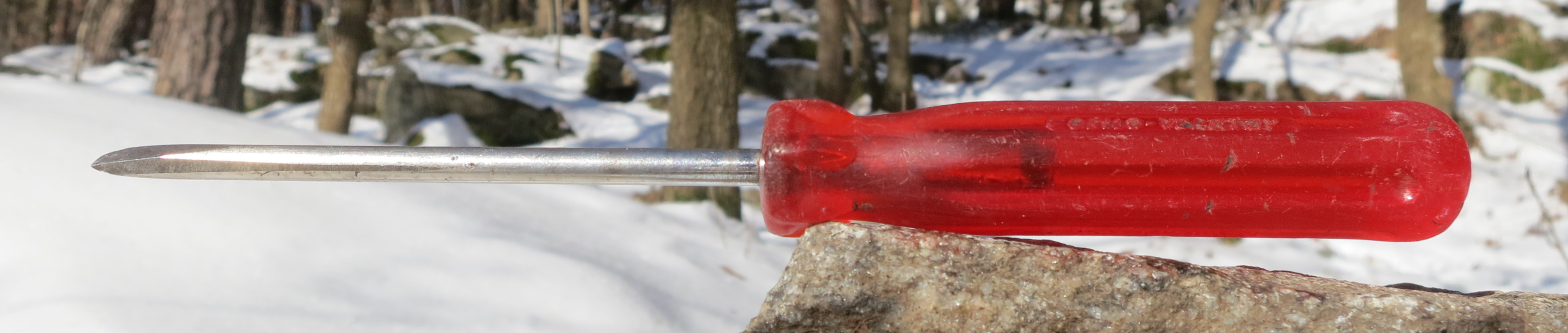
Red-handled screwdriver on rock outdoors (Source: Wikimedia Commons)
Crimping Tools: Used to securely attach connectors or lugs to the cable ends before joining. SACCO offices often use crimpers to ensure robust connections in their security systems.
Heat Guns: These provide controlled heat to shrink insulating sleeves or tapes over the joint, ensuring a weatherproof seal. Hotels use heat guns for outdoor lighting cable repairs, protecting joints from moisture.
| Name | Specification | Use |
|---|---|---|
| Wire Strippers | Adjustable gauge sizes 0.5mm² to 6mm² | Removing insulation without wire damage |
| Side Cutting Pliers | Hardened steel blades, insulated handles | Cutting and trimming cables |
| Insulated Screwdrivers | Rated up to 1000V, ergonomic grip | Safe tightening of electrical terminals |
| Crimping Tools | Ratchet mechanism, compatible with various lug sizes | Attaching connectors securely |
| Heat Guns | Temperature range 100°C to 600°C, variable settings | Shrinking insulating sleeves |
Handling electrical tools demands strict adherence to safety protocols to prevent accidents, especially in environments like county government offices and retail businesses where non-specialist staff may be present.
Choosing appropriate tools depends on the specific requirements of the workplace and cable types handled:
Create a free account to open more of this chapter.
Free: practical guides, quick cards, workplace scenarios and more.
Create a free accountThis chapter outlined the essential electrical tools and equipment required for effective PVC sheathed cable system installation, emphasizing the importance of selecting the right tools for each task. It detailed various measuring tools such as tape measures, tri-squares, steel rules, and spirit levels, which are crucial for accuracy in cable preparation and installation. The section on cutting tools covered implements like hacksaws, stripping knives, side cutters, and pliers, all necessary for precise cable cutting and stripping. Fixing tools including hammers, screwdrivers, and crimping tools were discussed for their roles in securing and connecting cables. The chapter also introduced key testing equipment such as multimeters, insulation resistance meters, earth resistance meters, clamp meters, and drills that ensure the integrity and safety of electrical joints. Proper storage of electrical tools was highlighted to maintain their condition and reliability. Different types of electrical cable joints including Britannia, married, tee, straight twist, and scarf joints were explained in detail to guide correct jointing techniques. Finally, the importance of housekeeping activities was stressed to promote a safe and organized work environment during cable jointing operations.
Type: Individual
| Tools & Equipment | Materials |
|---|---|
| Tape measure 5m | PVC sheathed cable 2.5mm2 |
| Tri-square 300mm | Cable jointing kit |
| Steel rule 300mm | Cable clips |
| Spirit level 600mm | |
| Marker pen |
| S/N | Item | Quantity |
|---|---|---|
| 1 | Tape measure 5m | 1 per Candidate |
| 2 | Tri-square 300mm | 1 per Candidate |
| 3 | Steel rule 300mm | 1 per Candidate |
| 4 | Spirit level 600mm | 1 per Candidate |
| 5 | Marker pen | 1 per Candidate |
| 6 | PVC sheathed cable 2.5mm2 | 2 metres per Candidate |
| 7 | Cable jointing kit | 1 per Candidate |
| 8 | Cable clips | 10 pcs per Candidate |
| 9 | Safety boots | 1 pair per Candidate |
| 10 | Dustcoat/overall | 1 per Candidate |
| Items to be Evaluated | Marks Available | Marks Obtained | Comments |
|---|---|---|---|
| TASK 1: Use measuring tools for cable joint setup | |||
| Wore personal protective equipment including safety boots and dustcoat (Award 1 or 0) | 1 | ||
| Selected and handled measuring tools correctly (tape measure, tri-square, steel rule, spirit level) (Award 2 or 0) | 2 | ||
| Measured cable lengths accurately within ±2mm tolerance (Award 3 or 0) | 3 | ||
| Marked joint positions clearly and at correct distances (1000mm and 1500mm) (Award 3 or 0) | 3 | ||
| Ensured cable is laid flat and straight during marking (Award 2 or 0) | 2 | ||
| Used spirit level to confirm horizontal alignment of cable during marking (Award 2 or 0) | 2 | ||
| Sub-Total | 13 | ||
| PRODUCT CHECKLIST | |||
| Cable lengths measured and marked at exactly 1000mm and 1500mm ±2mm (Award 4 or 0) | 4 | ||
| Joint positions marked squarely using tri-square with clear and legible markings (Award 3 or 0) | 3 | ||
| Cable laid flat and straight with no twists or bends at measurement points (Award 3 or 0) | 3 | ||
| Sub-Total | 10 | ||
| GRAND TOTAL | 23 | ||
Type: Individual
| Tools & Equipment | Materials |
|---|---|
| Hacksaw | 1.5 mm2 PVC sheathed cable |
| Stripping knife | 2.5 mm2 PVC sheathed cable |
| Side cutter | Work gloves |
| Pliers | Safety boots |
| Measuring tape | |
| Marker pen |
| S/N | Item | Quantity |
|---|---|---|
| 1 | Hacksaw | 1 Pc per Candidate |
| 2 | Stripping knife | 1 Pc per Candidate |
| 3 | Side cutter | 1 Pc per Candidate |
| 4 | Pliers | 1 Pc per Candidate |
| 5 | 1.5 mm2 PVC sheathed cable | 2 meters per Candidate |
| 6 | 2.5 mm2 PVC sheathed cable | 2 meters per Candidate |
| 7 | Measuring tape | 1 Pc per Candidate |
| 8 | Marker pen | 1 Pc per Candidate |
| 9 | Work gloves | 1 Pair per Candidate |
| 10 | Safety boots | 1 Pair per Candidate |
| Items to be Evaluated | Marks Available | Marks Obtained | Comments |
|---|---|---|---|
| TASK 1: Prepare cables using cutting tools | |||
| Wore personal protective equipment including safety boots and work gloves (Award 1 or 0) | 1 | ||
| Handled cutting tools (hacksaw, stripping knife, side cutter, pliers) correctly and safely (Award 2 or 0) | 2 | ||
| Measured cable lengths accurately within ±2 mm (Award 1 mark for each cable type measured correctly) | 3 | ||
| Marked cables clearly before cutting (Award 1 or 0) | 1 | ||
| Cut cables cleanly without damaging conductors (Award 3 or 0) | 3 | ||
| Stripped PVC sheath to expose 150 mm of conductor without nicking wires (Award 2 marks per cable type) | 4 | ||
| Performed good housekeeping by cleaning the work area after preparation (Award 2 or 0) | 2 | ||
| Sub-Total | 16 | ||
| PRODUCT CHECKLIST | |||
| Cable lengths cut to 2 meters ± 2 mm for each cable type (Award 1.5 marks per cable type) | 3 | ||
| Conductors stripped to 150 mm ± 2 mm, sheath removed cleanly without conductor damage (Award 2 marks per cable type) | 4 | ||
| Cable ends are neat, no frayed or damaged conductors visible (Award 3 or 0) | 3 | ||
| Sub-Total | 10 | ||
| GRAND TOTAL | 26 | ||
At the start of this chapter we promised you would be able to:
Tick each one you can genuinely do.
So, are you there yet?
You're competent when you can confidently do 50% or more of what this chapter promised.
Sign in to record how you're doing.