
By the end of this chapter, you will be able to:
Mastering these skills ensures you build strong, safe, and durable structures that meet professional standards in the construction trade.
Erecting columns and beams forms a critical phase in building superstructure works, serving as the skeletal framework that supports floors, walls, and roofs. In Kenya's construction industry, the precision and quality of these structural elements directly affect the durability and safety of buildings. Professionals in building technology must understand the tools, equipment, and materials essential for erecting columns and beams to ensure compliance with design specifications and structural integrity. This chapter explores the key instruments and materials used in this process, equipping learners with the knowledge to execute superstructure works effectively.
The successful erection of columns and beams depends heavily on the appropriate use of specialized tools and equipment. These instruments not only facilitate accurate measurements and alignments but also ensure safety and efficiency on construction sites. In Kenya, where building projects range from urban commercial complexes to rural housing developments, selecting the right tools influences both the speed and quality of work.
Accurate measurement and marking are foundational to erecting columns and beams according to design drawings. Tools in this category enable precise determination of positions, levels, and dimensions on site.
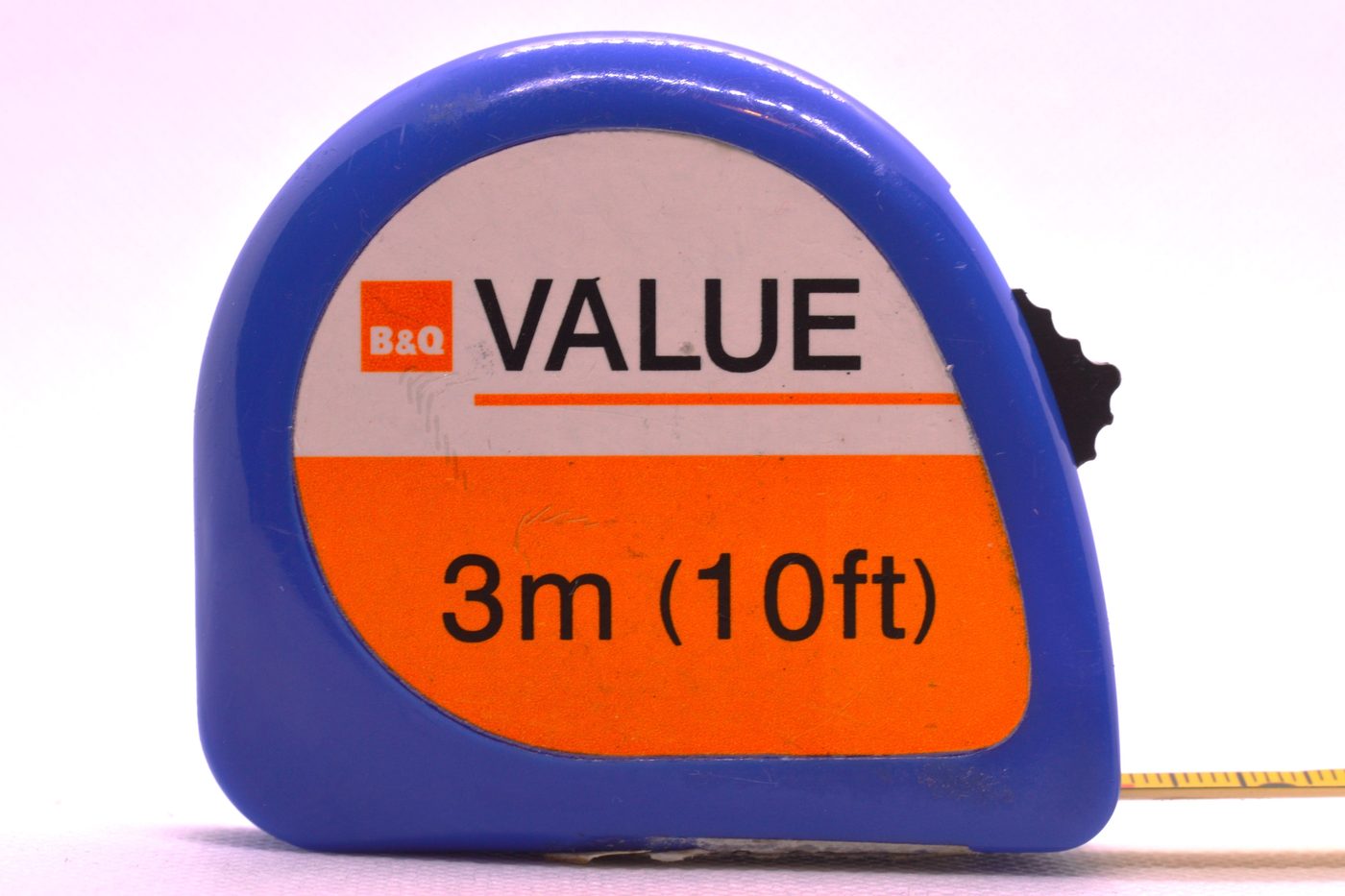
A measuring tape with metric and imperial units (Source: Wikimedia Commons)
Spirit Level: Contains a bubble vial to check horizontal and vertical alignments ensuring columns and beams are plumb and level.
Plumb Bob: A weighted object suspended from a string, used to establish a vertical reference line critical for setting column positions.
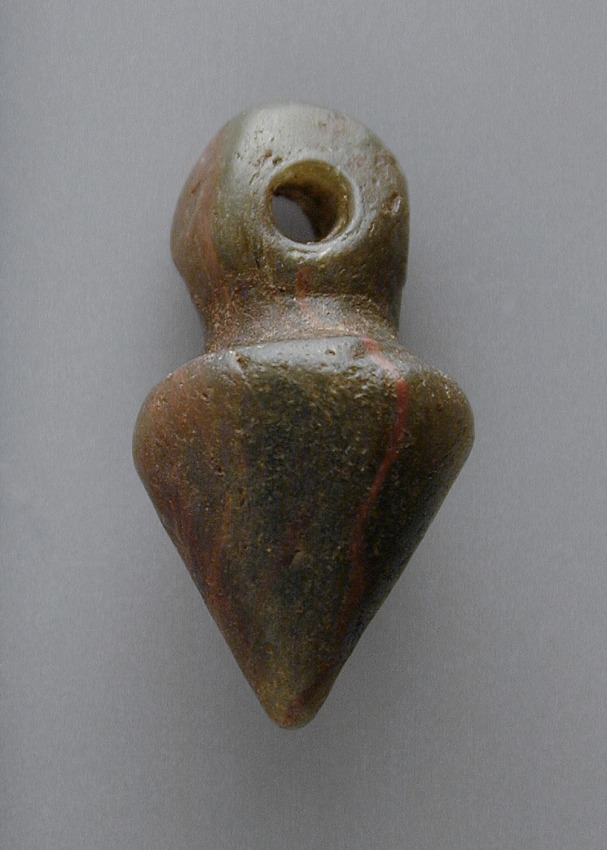
Traditional plumb bob used in building technology (Source: Wikimedia Commons)
Chalk Line: A string coated with chalk powder used to mark straight lines on large surfaces such as concrete slabs or formwork.
Marking Gauge: Used to scribe lines parallel to an edge, particularly useful in timber formwork for beams.
Erecting heavy columns and beams demands equipment that can safely lift, hold, and position structural elements during installation.
| Name | Specification | Use |
|---|---|---|
| Tower Crane | Capacity 5-20 tons, height adjustable | Lifting and positioning heavy beams and columns |
| Scaffolding | Modular steel or aluminum frames | Provides elevated platforms for workers to access beam and column joints |
| Chain Pulley | Load capacity 1-5 tons, manual or electric | Assists in hoisting materials vertically |
| Spirit Level | 600mm length, bubble vial | Ensures correct alignment during placement |
| Adjustable Props | Steel, adjustable height 1.5-3m | Supports beams temporarily during fixing |
Precise fixing and minor adjustments during column and beam erection rely on durable hand tools that enable secure connections and alignments.
Hammer: Used for driving nails and adjusting formwork.
Wrenches: For tightening bolts and nuts on steel beams and column connections.
Chisels: Employed to remove excess concrete or timber during fitting.
Spirit Level: Ensures precise alignment after fixing.
Ensuring worker safety while erecting columns and beams is paramount, given the risks of falls and heavy lifting.
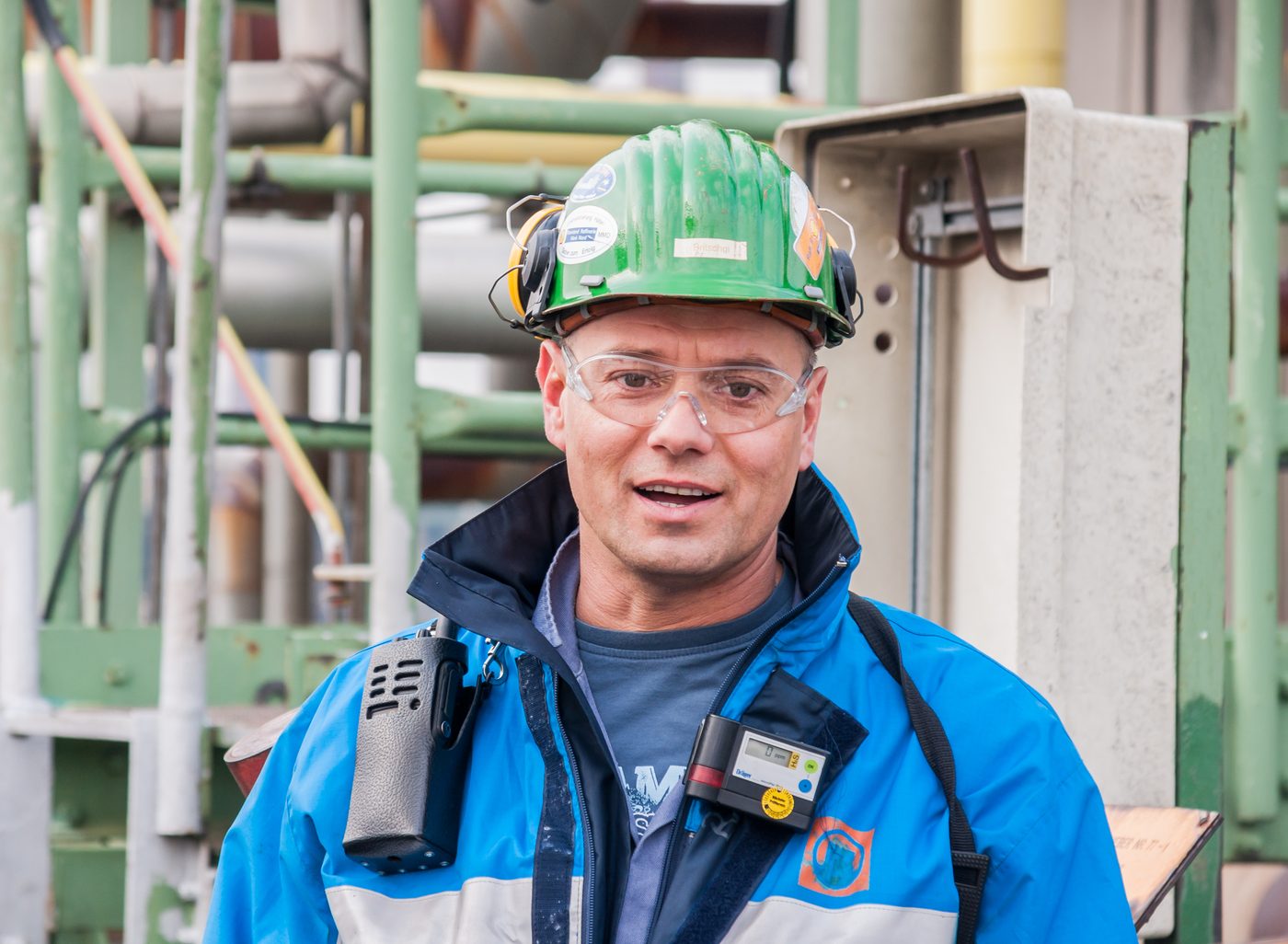
Green hard hat worn by worker (Source: Wikipedia (Hard hat))
Safety Harnesses: Used when working at heights on scaffolding or beams.
High Visibility Vests: Improve worker visibility to machine operators.

Pair of yellow work gloves used in carpentry (Source: Wikimedia Commons)
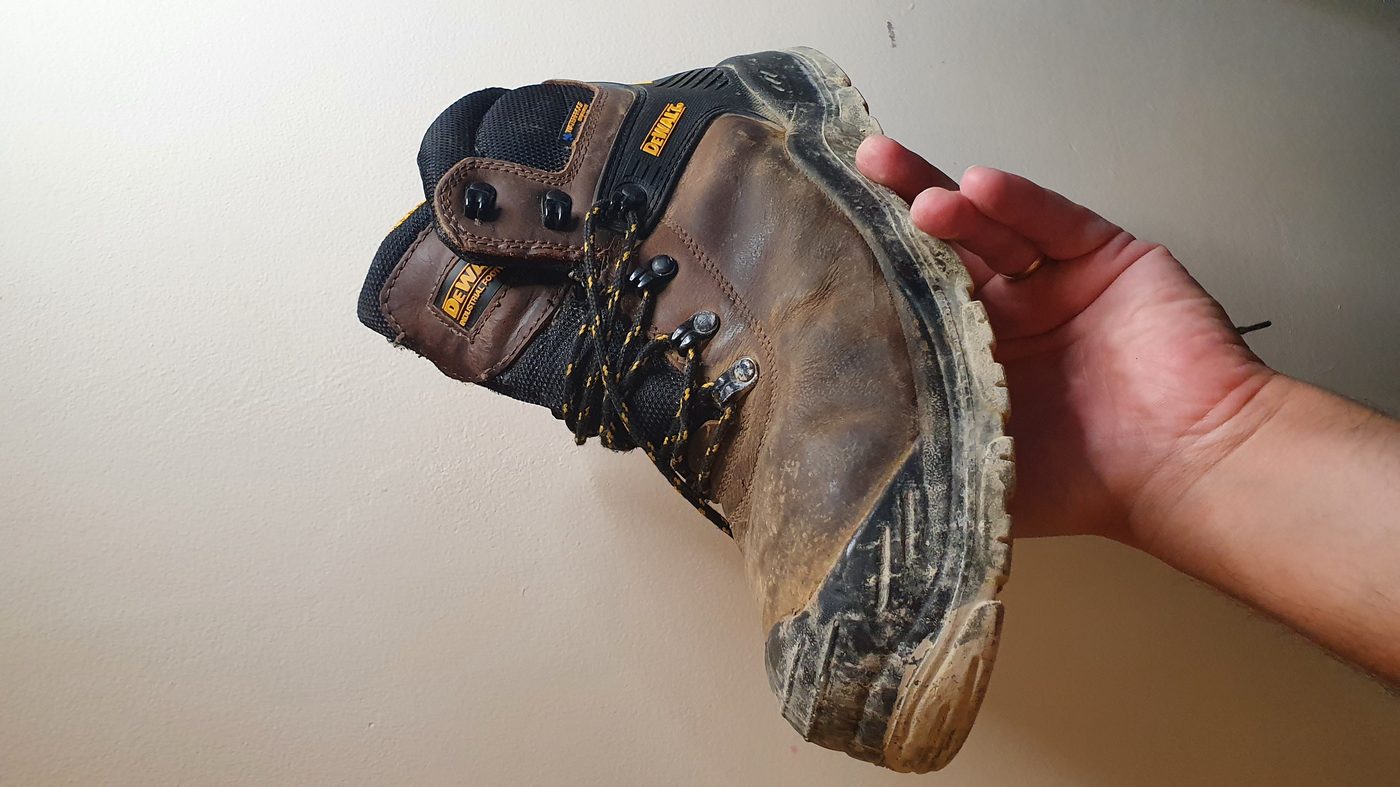
A single safety boot for industrial use (Source: Wikimedia Commons)
Create a free account to open more of this chapter.
Free: practical guides, quick cards, workplace scenarios and more.
Create a free accountThis chapter provides a comprehensive overview of erecting columns and beams, beginning with the essential tools and equipment required for handling structural elements effectively. It then explores the materials used in constructing these elements, emphasizing their suitability and quality. The process of fixing reinforcement bars is detailed, highlighting the importance of correct placement for structural integrity. The chapter further examines the erection of formwork, covering the materials chosen, various methods employed, and the critical procedures for dismantling. Different types of formwork are described alongside the key requirements for good formwork to ensure durability and safety. Common formwork failures are analyzed to understand their causes and prevention. Finally, the chapter addresses the placing of concrete, outlining the correct procedures, the necessity of proper compaction to eliminate voids, and the curing process to achieve the desired strength and durability of the concrete structure.
Which of the following tools is essential for fixing reinforcement bars in column construction?
a) Spirit level
b) Rebar bender
c) Trowel
d) Concrete vibrator
(2 marks)
Identify three common materials used for erecting formwork in building superstructure works.
(3 marks)
Type: Individual
| Tools & Equipment | Materials |
|---|---|
| Claw hammer | Safety helmet |
| Spirit level | Dust coat/Overall |
| Tape measure | Safety boots |
| Mason square | Gloves |
| Builders' line | |
| Plumb bob | |
| Spirit level tripod stand |
| S/N | Item | Quantity |
|---|---|---|
| 1 | Claw hammer | 1 Pc per Candidate |
| 2 | Spirit level | 1 Pc per Candidate |
| 3 | Tape measure (5m or 10m) | 1 Pc per Candidate |
| 4 | Mason square | 1 Pc per 5 Candidates |
| 5 | Builders' line (30m) | 1 Pc per 5 Candidates |
| 6 | Plumb bob | 1 Pc per 5 Candidates |
| 7 | Spirit level tripod stand | 1 Pc per 10 Candidates |
| 8 | Measuring tape (30m) | 1 Pc per 10 Candidates |
| 9 | Safety helmet | 1 Pc per Candidate |
| 10 | Dust coat/Overall | 1 Pc per Candidate |
| 11 | Safety boots | 1 Pair per Candidate |
| 12 | Gloves | 1 Pair per Candidate |
| Items to be Evaluated | Marks Available | Marks Obtained | Comments |
|---|---|---|---|
| TASK 1: Identification and selection of tools and PPE | |||
| Wore Personal Protective Equipment (helmet, dust coat, safety boots, gloves) (Award 1 mark for each PPE worn correctly or zero) | 4 | ||
| Identified and selected the tape measure correctly (Award 1 mark for correct identification and explanation or zero) | 1 | ||
| Identified and selected the spirit level and tripod stand (Award 1 mark each for spirit level and tripod stand correctly identified and explained) | 2 | ||
| Identified and selected the mason square (Award 1 mark for correct identification and explanation or zero) | 1 | ||
| Identified and selected the claw hammer (Award 1 mark for correct identification and explanation or zero) | 1 | ||
| Identified and selected the builders' line (Award 1 mark for correct identification and explanation or zero) | 1 | ||
| Identified and selected the plumb bob (Award 1 mark for correct identification and explanation or zero) | 1 | ||
| Explained the use of each tool and PPE in erecting columns and beams (Award 1 mark for each correct explanation or zero) | 4 | ||
| Sub-Total | 15 | ||
| PRODUCT CHECKLIST | |||
| Correctly identified and listed tools and equipment needed for columns 300mm x 300mm x 3000mm and beams 3000mm x 300mm x 300mm (Award 5 marks for complete and accurate listing or zero) | 5 | ||
| Correctly identified and listed PPE required for safe erection of columns and beams (Award 3 marks for complete and accurate listing or zero) | 3 | ||
| Explanation of the use of tools and PPE matches the task requirements (Award 4 marks for clear and correct explanation or zero) | 4 | ||
| Sub-Total | 12 | ||
| GRAND TOTAL | 27 | ||
Type: Individual
| Tools & Equipment | Materials |
|---|---|
| Measuring tape | Steel reinforcement bars (Y12, Y16) |
| Spirit level | Mild steel tie wire |
| Plumb bob | Concrete mix |
| Chalk line | Timber formwork |
| S/N | Item | Quantity |
|---|---|---|
| 1 | Steel reinforcement bars (Y12, Y16) | 5 kg per Candidate |
| 2 | Mild steel tie wire | 0.5 kg per Candidate |
| 3 | Concrete mix (cement, sand, ballast) | 0.1 m3 per Candidate |
| 4 | Timber formwork (50mm x 100mm) | 6 meters per Candidate |
| 5 | Measuring tape | 1 Pc per Candidate |
| 6 | Spirit level | 1 Pc per 5 Candidates |
| 7 | Plumb bob | 1 Pc per 5 Candidates |
| 8 | Chalk line | 1 Pc per Candidate |
| 9 | Safety helmet | 1 Pc per Candidate |
| 10 | Dust coat | 1 Pc per Candidate |
| 11 | Safety boots | 1 Pair per Candidate |
| Items to be Evaluated | Marks Available | Marks Obtained | Comments |
|---|---|---|---|
| TASK 1: Material Identification and Selection | |||
| Wore personal protective equipment (helmet, dust coat, safety boots) (Award 1 mark each for helmet, dust coat, and safety boots) | 3 | ||
| Interpreted working drawing correctly to identify column and beam dimensions (Award 3 marks for correct interpretation or zero) | 3 | ||
| Identified correct size and quantity of steel reinforcement bars for column and beam (Award marks for correct bar sizes and quantities as per drawing) | 5 | ||
| Selected appropriate concrete mix components and proportions (Award 4 marks for correct batching ratios or zero) | 4 | ||
| Chosen suitable timber formwork dimensions and quantity to support column and beam (Award 3 marks for correct timber size and length selection) | 3 | ||
| Selected appropriate mild steel tie wire for binding reinforcement bars (Award 2 marks for correct wire type and quantity) | 2 | ||
| Measured and marked materials accurately as per specifications (Award 4 marks for accurate measurement and marking) | 4 | ||
| Organized selected materials and tools for easy access during erection (Award 2 marks for proper organization) | 2 | ||
| Cleaned work area and stored unused materials properly after selection (Award 2 marks for cleanliness and proper storage) | 2 | ||
| Sub-Total | 28 | ||
| PRODUCT CHECKLIST | |||
| Correct identification and selection of steel bars (Y12 for column main bars, Y16 for beam main bars) (Award 4 marks for correct bar size selection) | 4 | ||
| Appropriate quantity and type of tie wire selected (Award 3 marks for correct tie wire selection) | 3 | ||
| Concrete mix components and batching ratio correctly identified (Award 5 marks for correct concrete mix proportions) | 5 | ||
| Timber formwork dimensions and quantity match requirements for column and beam (Award 4 marks for correct timber selection) | 4 | ||
| Materials measurements conform to column 300mm x 300mm x 1800mm and beam 4000mm x 200mm x 300mm specifications (Award 2 marks each for length, width/thickness, and height dimensions) | 6 | ||
| Materials arranged neatly and ready for use (Award 3 marks for neatness and readiness) | 3 | ||
| Sub-Total | 25 | ||
| GRAND TOTAL | 53 | ||
At the start of this chapter we promised you would be able to:
Tick each one you can genuinely do.
So, are you there yet?
You're competent when you can confidently do 50% or more of what this chapter promised.
Sign in to record how you're doing.