What you will be able to do
By the end of this chapter, you will be able to:
- Wear the correct personal protective equipment following all safety procedures.
- Prepare materials accurately according to the job specifications.
- Produce soil blocks safely and correctly by following the proper procedures.
- Cure soil blocks properly using the correct work methods.
These skills will help you create strong, durable masonry units that meet quality standards and keep you safe on the job.
Stabilized soil masonry units are an essential component in modern construction, particularly in Kenya where sustainable and cost-effective building methods are increasingly valued. These units combine soil with stabilizing agents to improve strength and durability, making them suitable for a range of structures from residential buildings to institutional facilities. Understanding the protective measures, materials, and preparation procedures involved in producing these units ensures quality, safety, and compliance with job specifications. This chapter provides comprehensive knowledge necessary for professionals across sectors such as healthcare, education, finance, and agriculture who engage in masonry production as part of their technical roles.
4.1 Personal Protective Equipment
Personal protective equipment (PPE) is critical in masonry units production to safeguard workers from hazards such as dust inhalation, chemical exposure, and physical injuries. In Kenya’s diverse workplaces from county hospitals to retail businesses, adherence to PPE standards reduces occupational health risks and promotes safe working environments. Proper use and maintenance of PPE enhance productivity and ensure compliance with occupational safety regulations.
4.1.1 Types of Personal Protective Equipment
Different types of PPE are employed specifically in stabilized soil masonry production to address distinct hazards present at various stages.
Respiratory Protection
- Dust Masks and Respirators: These prevent inhalation of fine soil particles and cement dust, which can cause respiratory diseases such as silicosis. For example, workers at a county government construction site use respirators when mixing soil and cement to minimize airborne dust exposure.
Eye Protection
- Safety Goggles and Glasses: These protect the eyes from soil splashes, cement particles, and flying debris during mixing and molding processes. In a university workshop, students producing masonry units wear goggles to prevent eye irritation and injury.
Hand Protection
- Gloves: Made from rubber or leather, gloves protect hands from abrasive soil, cement’s alkaline nature, and sharp tools. At a cooperative producing bricks for local markets, workers rely on gloves to avoid skin burns and cuts.
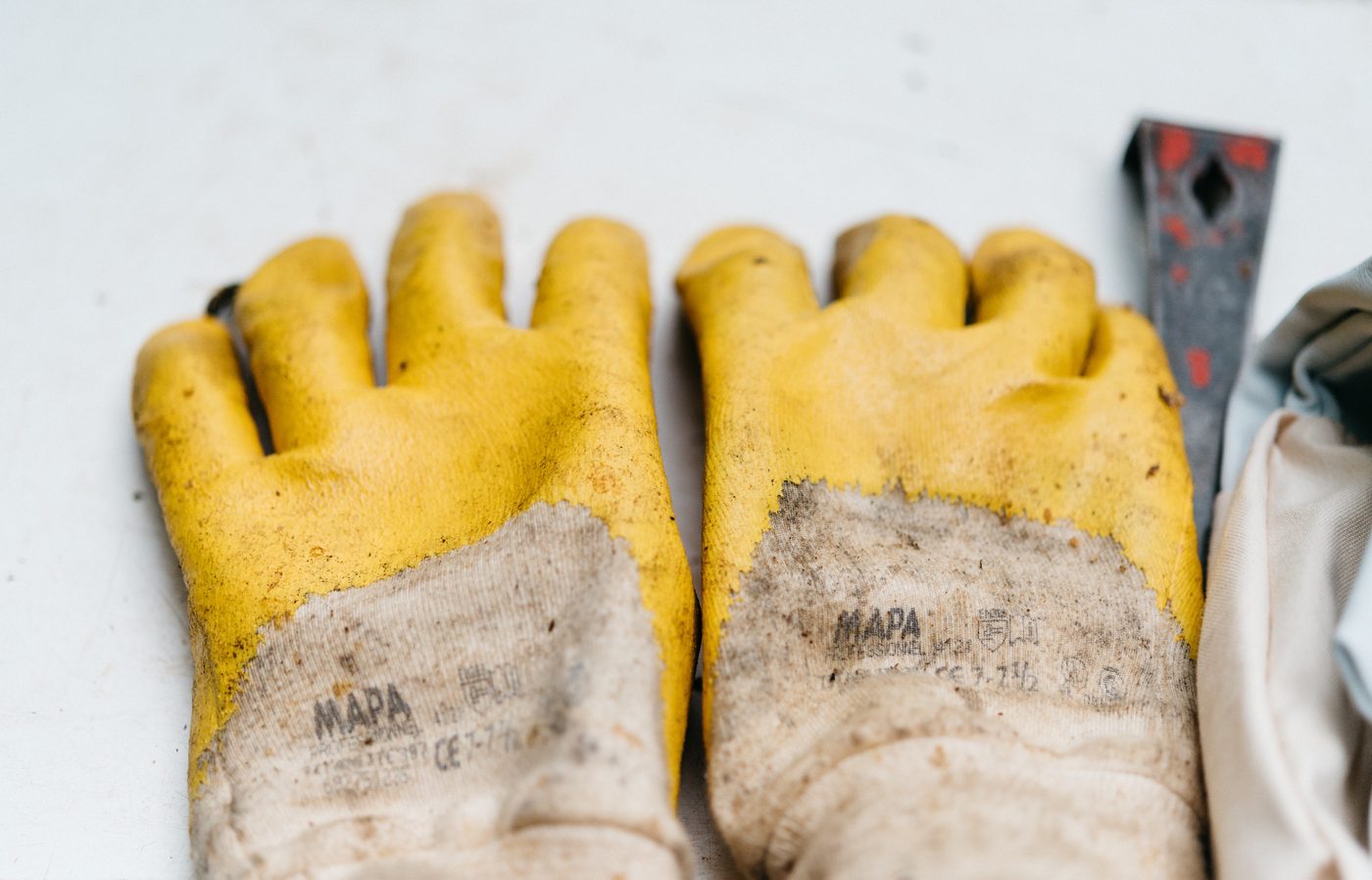
Pair of yellow work gloves used in carpentry (Source: Wikimedia Commons)
Foot Protection
- Safety Boots: These provide protection from heavy falling objects and punctures from sharp materials on-site. For instance, employees at a hotel construction project wear steel-toed boots to safeguard their feet during masonry unit handling.
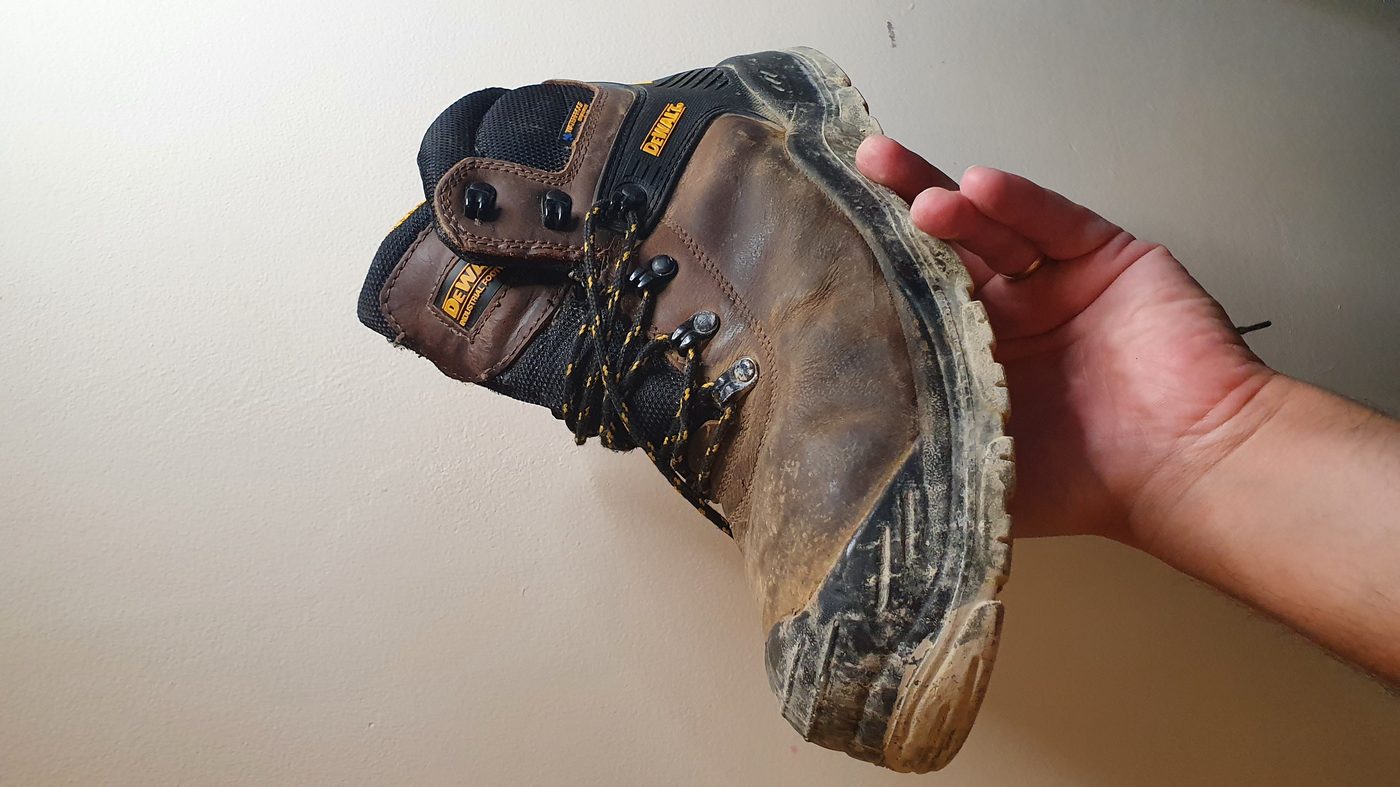
A single safety boot for industrial use (Source: Wikimedia Commons)
Protective Clothing
- Coveralls and Aprons: These garments shield skin and personal clothing from soil, cement, and water splashes. Staff at a SACCO office involved in small-scale masonry training use coveralls to maintain hygiene and prevent skin contact.
4.1.2 Uses of Personal Protective Equipment
The effective use of PPE in masonry production is vital to prevent occupational hazards and ensure compliance with Kenyan safety laws such as the Occupational Safety and Health Act.
Protection from Respiratory Hazards
- PPE like dust masks reduce inhalation of harmful dust generated during soil preparation, mixing, and curing, preventing chronic respiratory conditions common among workers in agricultural cooperatives involved in brick production.
Prevention of Eye Injuries
- Safety goggles stop fine particles and splashes from damaging the eyes, especially critical in county referral hospitals where maintenance teams produce masonry units onsite for repairs.
Hand Safety during Handling
- Gloves protect hands from chemical burns caused by cement and cuts from sharp tools, enabling workers in retail business premises constructing storage units to perform tasks safely.
Foot Injury Prevention
- Safety boots absorb impacts from heavy bricks or tools dropped accidentally, which is essential in university construction workshops where students handle heavy masonry units.
Maintaining Cleanliness and Skin Protection
- Protective clothing prevents prolonged skin contact with wet soil and stabilizers, reducing risks of dermatitis among workers in local farm construction projects.
Create a free account to open more of this chapter.
Free: practical guides, quick cards, workplace scenarios and more.
Create a free accountChapter Summary
This chapter covered the essential aspects of producing stabilized soil masonry units, beginning with the importance of personal protective equipment, detailing various types and their specific uses to ensure safety during production. It then examined the materials required, focusing on job specifications and the proper preparation procedures to achieve quality masonry units. The process of preparing soil blocks was explored, emphasizing the correct steps to form durable and uniform blocks. Lastly, the chapter addressed the curing of soil blocks, highlighting the methods necessary to strengthen the blocks and improve their structural integrity. Together, these topics provide a comprehensive guide for producing reliable stabilized soil masonry units in practical settings.
Self-Assessment
A. Written Assessment
- Identify five types of personal protective equipment used in masonry units production. (5 marks)
- Explain the primary use of gloves and dust masks during the production of stabilized soil blocks. (3 marks)
Chapter Examination Questions
SECTION A (40 Marks) - Answer ALL Questions
- Identify five types of personal protective equipment used in the production of stabilized soil masonry units and explain their specific uses. (4 marks)
- Describe the job specifications for materials used in stabilized soil masonry units production. (4 marks)
Chapter Practical Activities
Practical 1: Select and use appropriate personal protective equipment for stabilized soil masonry units production
Type: Individual
| Tools & Equipment | Materials |
|---|---|
| Helmet | |
| Protective Gloves | |
| Dustcoat/Overall | |
| Safety Boots | |
| Safety Goggles | |
| Ear Muffs or Ear Plugs |
| S/N | Item | Quantity |
|---|---|---|
| 1 | Helmet | 1 Pc per Candidate |
| 2 | Protective Gloves | 1 Pair per Candidate |
| 3 | Dustcoat/Overall | 1 Pc per Candidate |
| 4 | Safety Boots | 1 Pair per Candidate |
| 5 | Safety Goggles | 1 Pair per Candidate |
| 6 | Ear Muffs or Ear Plugs | 1 Pair per Candidate |
| Items to be Evaluated | Marks Available | Marks Obtained | Comments |
|---|---|---|---|
| TASK 1: Identify and use PPE | |||
| Identified and donned helmet correctly according to workplace safety procedures (Award 1 mark for correct wearing of helmet) | 1 | ||
| Selected and wore protective gloves properly (Award 1 mark for correct wearing of gloves) | 1 | ||
| Wore dustcoat/overall appropriately with sleeves and collar secured (Award 1 mark for correct wearing of dustcoat/overall) | 1 | ||
| Wore safety boots or gumboots suitable for the work environment (Award 1 mark for correct wearing of safety boots) | 1 | ||
| Used safety goggles to protect eyes from dust and flying particles (Award 1 mark for correct usage of safety goggles) | 1 | ||
| Used ear protection (ear muffs or plugs) to safeguard hearing (Award 1 mark for correct usage of ear protection) | 1 | ||
| Demonstrated correct removal and safe custody of PPE after use (Award 2 marks for proper removal and storage of PPE) | 2 | ||
| Observed general workplace safety and hygiene while using PPE (Award 2 marks for adherence to safety and hygiene protocols) | 2 | ||
| Sub-Total | 10 | ||
| PRODUCT CHECKLIST | |||
| Correctly selected and worn all required PPE items (helmet, gloves, dustcoat, safety boots, goggles, ear protection) (Award 1 mark for each PPE correctly worn and used) | 10 | ||
| Sub-Total | 10 | ||
| GRAND TOTAL | 20 | ||
Practical 2: Identify and prepare materials for stabilized soil masonry units
Type: Individual
| Tools & Equipment | Materials |
|---|---|
| Weighing scale | Stone dust |
| Spade | Sand |
| Wheelbarrow | Portland cement |
| Measuring bucket | Water |
| Mixing pan |
| S/N | Item | Quantity |
|---|---|---|
| 1 | Helmet | 1 Pc per Candidate |
| 2 | Gloves | 1 Pair per Candidate |
| 3 | Dustcoat/Overall | 1 Pc per Candidate |
| 4 | Gumboots/Safety boots | 1 Pair per Candidate |
| 5 | Weighing scale | 1 Pc per 5 Candidates |
| 6 | Spade | 1 Pc per Candidate |
| 7 | Wheelbarrow | 1 Pc per 3 Candidates |
| 8 | Water container (20 L) | 1 Pc per Candidate |
| 9 | Measuring bucket (5 L) | 1 Pc per Candidate |
| 10 | Mixing pan | 1 Pc per Candidate |
| 11 | Stone dust | 10 kg per Candidate |
| 12 | Sand | 10 kg per Candidate |
| 13 | Portland cement | 5 kg per Candidate |
| 14 | Water | 10 Litres per Candidate |
| Items to be Evaluated | Marks Available | Marks Obtained | Comments |
|---|---|---|---|
| TASK 1: Identification and Preparation of Materials | |||
| Wore PPE including helmet, gloves, dustcoat/overall, and gumboots/safety boots (Award 1 mark for each PPE donned as per workplace procedures 4 x 1 = 4 Marks) | 4 | ||
| Collected stone dust, sand, cement, and water as per job specifications (Award 1 mark for each material collected correctly 3 x 1 = 3 Marks) | 3 | ||
| Batched stone dust, sand and cement correctly in the ratio 2:2:1 by weight (Award 2 marks each for correct batching of stone dust, sand, and cement 3 x 2 = 6 Marks) | 6 | ||
| Measured and added the correct amount of water (10 litres) for mixing (Award 3 marks for accurate water measurement and addition) | 3 | ||
| Mixed materials uniformly to prepare stabilized soil masonry mix (Award 4 marks for thorough mixing and uniformity) | 4 | ||
| Maintained cleanliness and safe custody of tools and materials during preparation (Award 2 marks for proper handling and housekeeping) | 2 | ||
| Sub-Total | 22 | ||
| PRODUCT CHECKLIST | |||
| Correct batching of materials as per specified quantities (10 kg stone dust, 10 kg sand, 5 kg cement) (Award 2 marks for each material batched correctly 3 x 2 = 6 Marks) | 6 | ||
| Accurate measurement of water (10 litres) (Award 3 marks for correct water quantity) | 3 | ||
| Uniform and well-mixed stabilized soil masonry mix (Award 4 marks for consistent mix with no lumps or segregation) | 4 | ||
| Tools and equipment cleaned and stored properly after use (Award 3 marks for proper housekeeping and storage) | 3 | ||
| Sub-Total | 16 | ||
| GRAND TOTAL | 38 | ||
At the start of this chapter we promised you would be able to:
- Wear the correct personal protective equipment following all safety procedures.
- Prepare materials accurately according to the job specifications.
- Produce soil blocks safely and correctly by following the proper procedures.
- Cure soil blocks properly using the correct work methods.
Tick each one you can genuinely do.
Sample simulation — try how the simulator works. A version built for this chapter's practical is coming.
Prepare Kenyan PilauLocked ▸Free: practical guides, quick cards, workplace scenarios and more.
Now — are you there yet?
You're competent when you can confidently do 50% or more of what this chapter promised.
Sign in to record how you're doing.