
By the end of this chapter, you will be able to:
Mastering these skills will help you build strong, safe poultry structures that support healthy and productive poultry farming.
Constructing poultry structures is a fundamental skill for animal production professionals in Kenya, ensuring the health, productivity, and welfare of poultry flocks. Properly designed and constructed poultry houses protect birds from predators, adverse weather, and disease, while providing an environment conducive to growth and egg production. This chapter explores the essential tools, equipment, and materials required for poultry structure construction, focusing on practical application in diverse Kenyan farming settings.
Construction of poultry houses demands a combination of appropriate tools, equipment, and materials selected to suit the specific design, climate, and scale of production. Kenyan poultry farmers, whether small-scale farmers in rural areas or commercial producers near urban centres, rely on these elements to build durable, cost-effective, and biosecure poultry structures.
The selection of construction tools influences the efficiency, quality, and safety of poultry house building. Understanding the function and proper use of these tools is crucial for workers in animal production to minimize delays and defects.
Hammers: Essential for driving nails into wood or metal fixtures, hammers vary by size and type; claw hammers are common for framing and finishing tasks.
Hand Saws: Used to cut timber to size; a sharp blade ensures clean cuts, reducing material waste.
Chisels: Employed to carve or shape wood joints, crucial for tight-fitting frames.
Measuring Tapes: Accuracy in measurement is critical to ensure the poultry house conforms to design specifications.
Spirit Levels: Maintain structural integrity by confirming that surfaces are level or plumb.
Pliers: Useful for bending or cutting wire mesh, a common poultry house material to prevent predator entry.
Power tools increase construction speed and precision, particularly for medium to large-scale poultry farms in Kenya. Common power tools include electric drills, circular saws, angle grinders, and nail guns. These tools require electricity or fuel, which may limit their use in off-grid rural areas.
Circular Saws: Provide faster and more accurate cutting of wood or metal sheets compared to hand saws.
Angle Grinders: Used to cut or grind metal components such as rebar or wire mesh.
Safety tools protect workers from injury during construction. In Kenyan poultry projects, safety equipment includes gloves, safety goggles, dust masks, ear protection, and sturdy boots. Their consistent use reduces accidents and health risks.

Pair of yellow work gloves used in carpentry (Source: Wikimedia Commons)

Clear safety goggles for eye protection (Source: Wikimedia Commons)
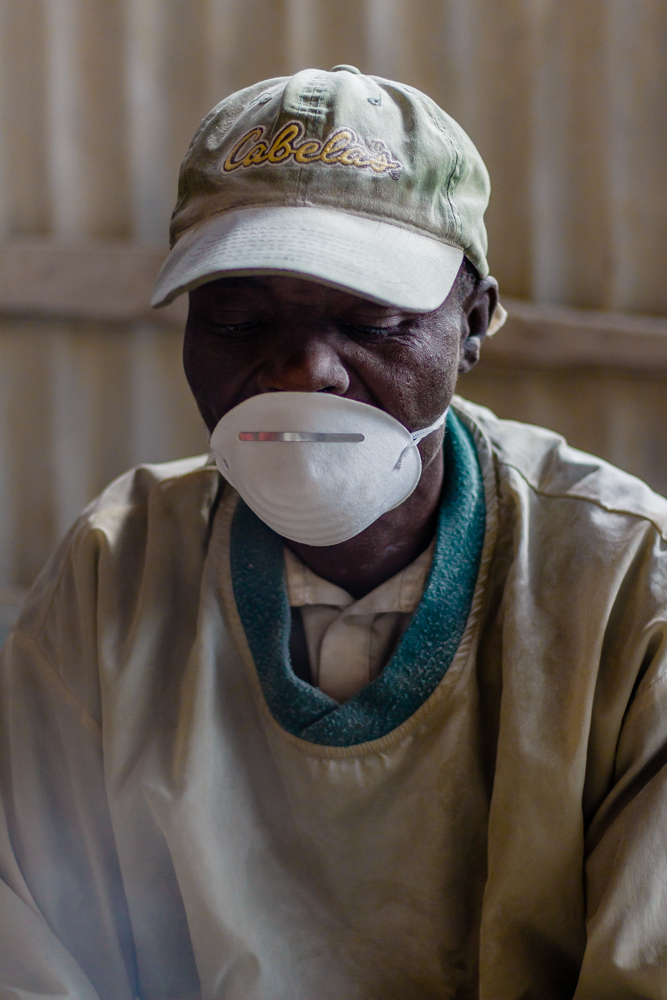
Person wearing a dust mask (Source: Wikimedia Commons)
Ear Protection: Guards against hearing damage from loud power tools.
Boots: Provide foot protection from heavy falling objects or sharp nails.
Construction equipment refers to larger devices and machinery that facilitate construction tasks beyond manual capabilities. In Kenyan poultry production, the choice of equipment depends on the scale of the project, availability of power, and budget constraints.
Concrete and mortar mixing equipment are vital for creating the foundation and structural elements of poultry houses. Common equipment includes portable concrete mixers and wheelbarrows.
Handling heavy materials like timber beams, metal sheets, or cement bags requires appropriate equipment to reduce injury risk and improve workflow.
Precision in layout and construction is ensured by equipment such as laser levels, measuring wheels, and chalk lines.
Laser Levels: Provide accurate horizontal or vertical alignment over long distances, useful for large poultry houses.
Measuring Wheels: Allow quick measurement of distances on-site, especially for marking foundations.
Chalk Lines: Used to mark straight lines on surfaces, guiding cutting or assembly.
The choice of construction materials affects the durability, biosecurity, ventilation, and thermal comfort of poultry structures. Kenyan poultry farmers must balance cost, availability, and suitability when selecting materials.
These materials form the framework and shell of the poultry house, providing support and protection.
Timber: Commonly used for frames due to its availability and ease of handling; treated timber resists pests and decay.
Steel: Used in commercial poultry houses for stronger, longer-lasting frames and roofing supports.
Concrete Blocks: Provide sturdy walls resistant to weather and predators; commonly used in semi-permanent structures.
Corrugated Iron Sheets: Widely used roofing material offering durability and rain protection.
Wire Mesh: Installed on windows and ventilation openings to allow airflow while preventing predator entry.
Flooring materials impact hygiene, bird comfort, and ease of cleaning.
Maintaining optimal temperature and airflow is critical for bird health.
Create a free account to open more of this chapter.
Free: practical guides, quick cards, workplace scenarios and more.
Create a free accountThis chapter explored the essential tools, equipment, and materials required for constructing poultry structures, emphasizing their specific roles in the building process. It outlined the critical considerations for selecting a suitable site to ensure optimal poultry health and productivity. The design of poultry structures was discussed with attention to functionality, ventilation, and space requirements. Detailed steps for the actual construction process were provided, highlighting best practices to achieve durable and efficient housing. The chapter also covered the importance of maintaining accurate records related to construction and ongoing maintenance to support management decisions. Effective waste management techniques were examined to promote hygiene and environmental sustainability. Furthermore, the chapter described various poultry house equipment and materials necessary for daily operations and their proper installation procedures. Finally, the role of poultry production manuals was highlighted as valuable resources for guiding consistent and informed poultry management practices.
At the start of this chapter we promised you would be able to:
Tick each one you can genuinely do.
So, are you there yet?
You're competent when you can confidently do 50% or more of what this chapter promised.
Sign in to record how you're doing.